Discussing Effective Lawmaking with North Dakota Senator Judy Lee
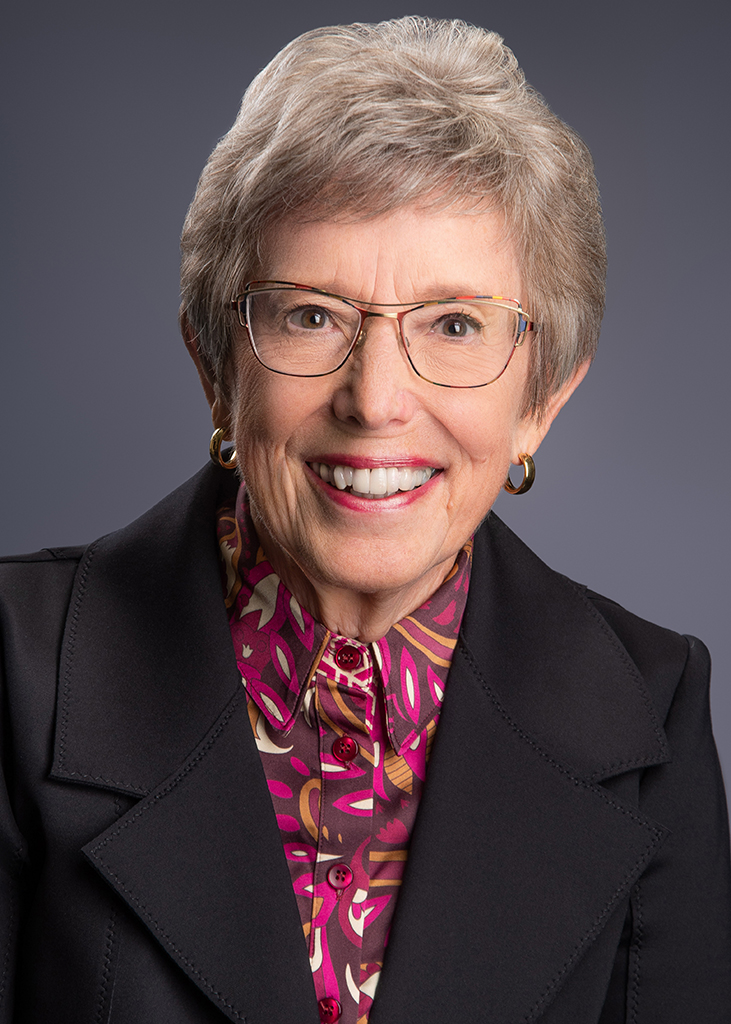
Judy Lee has represented North Dakota’s 13th Senate District since 1994, making her one of the longest-serving members of the chamber. She is a senior Republican lawmaker with extensive institutional knowledge and experience navigating long-term policy change. She is currently the chair of the Human Services Committee and was the President Pro Tempore in 2007. She has also served on, or been associated with, committees related to healthcare, human services, long-term care, and regulatory policy.
Senator Lee is widely recognized for her leadership on health and human services legislation, including: long-term care regulation, health insurance oversight, behavioral health and addiction policy, and early childhood and family services. Her background in medical technology informs a policy portfolio grounded in science, systems management, and practical implementation concerns. She is known for sponsoring and advancing complex, high-impact policy reforms, often requiring coordination across agencies and stakeholders.
According to the American Conservative Union (ACU), she has ranked as the most moderate Republican in the North Dakota Senate since 2015. She is regarded within the legislature as a consensus-builder, pragmatic and policy-oriented, and someone who often works quietly across the aisle. Her moderate ideology has positioned her as a go-between on contentious health and social service issues.
The importance of bipartisanship:
“It’s just that contact is the most important thing. I do want to mention also, because it isn’t that we aren’t careful about belonging to one party or the other. But my partner in this human services and healthcare deal is Senator Kathy Hogan, who’s a Democrat who has served nearly as long as I and she has expertise from having been director of Cass County Social Services for 20-some years. So, between us. We’ve… kind of carved out our own little niche, I guess, but we have become kind of a resource for pretty much everybody. And it took a while for some folks on both ends of the spectrum to have much respect for us, because we were dealing with somebody from the other party. But I think most of the… most of the people have, kind of gotten over that mean, the majority of them did it right away. I mean, we just don’t care. You care about the people, you don’t care about the R’s and D’s much.” [The importance of bipartisanship for effective lawmaking is emphasized in our research].
On developing expertise and building connections:
“I’ve been really involved with the National Conference of State Legislatures for a long time, and they’re a wonderful source of information. Another one is the National Academy of State Health Policy, which is like graduate school. And the Council of State Governments is also an excellent source… I have a Senate friend in Jamestown that calls me about Human Services stuff all the time, and I call him about his committee. … And another one who’s an education guru, and so when I’ve got something going on with education, because I have the second biggest school district in the state, is mine here. I know that I can just call Don, and I can find out what he thinks about this whole thing, and that helps me a lot, so… we just… we work together really well, I think. And we’ve all found someone who’s an ally, that knows something more about the issue than we do. And I am happy to be a resource for those people who think I might be able to help them as well.” [This coincides with our 5 Habits of Effective Lawmakers].
On developing an agenda rooted in personal background, previous experiences and policy expertise:
“It absolutely is, and because I have been involved with human services and health stuff for a long time, I get calls from all over the state who have a problem they’d like to solve. And I tell them all that I don’t have all the answers, I don’t even have many of them, but I’m the traffic cop. After all these years, I know where to go, which direction, which road to take. So… but this is what I do request, and I suggest this to other legislators as well.” [Specializing in a particular policy area helps lawmakers become more effective].
Alan Wiseman (00:00:09.920)
Hello, my name is Alan Wiseman, and I’m the Associate Provost of Strategic Projects and Professor of Political Science at Vanderbilt University. And along with Craig Volden at the Frank Batten School of Leadership and Public Policy at the University of Virginia, I also co-direct the Center for Effective Lawmaking. In today’s version of our conversations with Effective Lawmakers video series, we are delighted to welcome Judy Lee, who has served in the North Dakota State Senate since 1994, representing West Fargo in District 13. Senator Lee has held numerous leadership positions in the State Senate, including serving as Chair of the Human Services Committee, and she also previously served as President Pro Tempore of the Senate. She earned her bachelor’s degree in clinical laboratory sciences from the University of North Dakota, and worked in clinical health fields before transitioning to a long career as a real estate broker in North Dakota. Now, the reason why we’re especially interested in talking with her today is that across her 30-plus years of service in the North Dakota Senate, she is consistently ranked as being above expectations in lawmaking effectiveness, according to our data at the Center for Effective Lawmaking. Even more remarkable is the fact that in 7 separate Senate terms, we have ranked her as the most effective lawmaker in the North Dakota State Senate. And today, we’re hoping to learn from her about how she approaches the legislative process to become such an effective lawmaker across her entire career. So, Senator Lee, thanks so much for joining us for a Center for Effective Lawmaking conversation. Really appreciate your time.
Judy Lee (00:01:38.500)
Thank you for the invitation.
Alan Wiseman (00:01:40.005)
Great. So as I discussed with you just a few minutes earlier, we’re going to be asking you a series of fairly general questions, and we’d love to hear from you, with really any specific examples from your own experiences as they come to mind. So all that said, I think what we’d like to do is kind of rewind the clock a bit and start with some questions about your background, and by that I mean before you were elected to the North Dakota State Legislature, how this ultimately shaped or influenced your approach to lawmaking. You know, and more specifically, how did your background, you know, with hard sciences and clinical laboratory sciences coming out of undergrad, as well as your business experience in real estate, influence your decision to run for a seat in the North Dakota Senate? And, you know, essentially, what were you hoping to accomplish at the time you first ran for office?
Judy Lee (00:02:30.230)
I don’t mean for this to be a long answer, but it’s going to be a little bit of a long answer. It started with an extraordinary high school chemistry and physics teacher named Harold Bliss, just the best teacher ever. And, so I… and I liked math and science, but he just really, moved that way forward on the, on the scale. And so I… that’s why I ended up going into the clinical laboratory field, actually, is because I really loved chemistry. And my dad was a civil engineer who returned to farming after World War II when the hired men all went in the Army or during World War II. So I was used to somebody who was analytical in the house, and I’m glad that I maybe inherited a small part of that gene pool. But anyway, I’ve really enjoyed my years as a med tech, working in hospital and clinic labs. I liked being part of a diagnostic team, which would diagnose and follow up on whatever the treatment plans might be as people’s years went by. But then we moved to West Fargo, where I live now, and I was looking at hospital jobs. And my husband said, there’s an ad in the paper here from Park Company about being a real estate agent. He said, why don’t you check it out? And I said, no, seven, I don’t know, 22 times maybe. But finally did, and found that the owner of the company was the most remarkable woman who made it the best and most successful office in town, and a very professional one. But if you think back on this, I like problem solving in my chemistry and physics classes. I liked problem solving in my med tech life. And the good part of that is that I was… when I left the hospital, aside from night call, which… wasn’t every night. I was done for the day. Finished for the day. In real estate, you’re never finished for the day, unless you only have one customer, which would be a terrible thing. So, it’s still problem solving, and you’re working with people that you don’t know. Having them in the car for a couple of days or more, trying to find the right place for them if they’re looking for a home and they’re moving in, and they think, North Dakota? One couple came in, and that’s what she was like. She was not happy about her husband’s transfer. And 3 years later, when he was transferred again, she was not happy about leaving. So the good thing is, we made her feel at home, when she was here. But that’s why we kind of moved on with this. And then, I was always active in community activities, Chamber of Commerce, other kinds of things like that, school activities of our kids. And I had people encourage me to run for the legislature, and I kept saying, no, we had two kids in college, that means tuition, la-di-da. And there are some funny stories, which I won’t take the time to tell, but… the final straw was…when the governor got off a plane that we were meeting him, at the airport to see a new plane that United was flying into Fargo, he stepped off the plane, and he said, Judy, you’ve got to run for the Senate. And I thought, how did anybody get to you? That’s how broad this insidious network had gone in recruiting. So I did. I also had learned in the real estate business that I really liked working for myself, because you’re an independent contractor, not an employee in nearly every real estate company. And so, if you don’t work, you don’t eat. But it also means that your work is rewarded if you do it effectively, and it’s all people-oriented. Often, as I mentioned, with people that you don’t know. So, so much of this kind of carried over. So my husband and I visited about the whole thing, and we decided, okay, we’ve got one kid that’ll graduate, and, you know, we can figure this out with the tuition and all. And that was a long time ago, and the announcement of my running for re-election was just made along with my running mates this morning, so… we’re gonna do it again. And… but the whole thing is people-oriented. The fact that being community involved puts you with people you don’t know that you’re now happy to know. The fact that in the hospital, you have to make somebody comfortable in order for them to at least tolerate your sticking him for a blood sample or whatever. In the real estate business, if you don’t please them, they’ll go work with somebody else. And it’s not that I’m necessarily a people pleaser, I don’t think any of my friends would suggest that that would be the case, but an open communicator. And right now, I think lots of our states have a lot of headbanging between one end of the spectrum and the other end of the spectrum. And there’s a point where it’s okay to say, I really understand what your point of view is. I really understand the issue, and I appreciate your point of view, but I do see it just a little differently. And that doesn’t say, you’re dumb. I disagree with you. You just have to learn to be a little bit better communicator, and that’s, I think, a long way to get to why I ended up where I am.
Craig Volden (00:07:41.000)
Well, thanks so much for all that background, and thanks again for joining us today. I see so many of those strands that we’ll want to pick at over the coming minutes and hours, in terms of the problem-solving idea, in terms of people-oriented communications and so on but I want to stick right now still back 20-some years ago, and think about, when somebody arrives in the legislature, when you arrived in the legislature. How do you learn the ropes? Is there a new member orientation, or has that evolved over time? Another way of asking that is. You know, what do you wish you knew then that you know now?
Judy Lee (00:08:25.000)
I don’t think there’s any way you can orient anybody well enough at the beginning to really know what it’s like. You’re jumping in the deep end of the pool. We don’t have offices, and we don’t have staff. What you see is what you get. So, one learns quickly, but the Senate is… we have 47 members in the Senate, and there are 94 in the House. So, on our committees, we have half as many people. And that means that you really get to know pretty well the people that you’re working with in that area. Now, I think that one of the most important things that leadership needs to do, and has generally done, is appoint good chair people to these committees who orient their folks, and I was lucky to be a vice chair in my freshman session. And so that meant that I was able to kind of be a partner in determining what some of the agendas were going to be for the day, and how do we plan out what the schedule is that’s posted for the hearings, and some of those kinds of things. But you have… you have to have a bit of a background in people communication in order to make this work. And that is… that isn’t something that you can learn in an orientation session. You just find out by being there. The majority of the people that are in the legislature, both parties, both houses, are really good people with the right motivations in mind to serve their neighbors well. We’re not overpaid, I can tell you that, and it’s a big-time commitment. So there must be some other crazy reason that we… that we do this. But there is a reward in… for me anyway. But I see something, particularly in the human services and healthcare area, because that’s where I’ve kind of focused my major. Where somebody who needed a service of one sort or another is being helped I go back to the Children’s Health Insurance Program being implemented, which was a really important one. We have… we have absorbed that into Medicaid here. It’s really better for the kids and families. And, we weren’t running two programs that were sort of parallel. But that’s just an example of, you know, it… I don’t mind getting a message from somebody that says, can you help me do something? And I certainly will see if there’s… a way that we can answer their question or address their issue. But it’s also fun to get those not quite as frequent ones that might say, you know, it’s really working out okay, and I wanted you to know. So, today, it was a message from a really wonderful man in Bismarck, who has been a guardian for people who don’t have a family member or anybody to handle their healthcare and financial decisions. Very dedicated gentleman who worked with me to change the structure with which guardians are overseen, because it was not working. That’s kind of a backroom thing, the public doesn’t know about that. I’m never going to put it on campaign stuff, because who cares, you know? You only care if you have somebody that you know who is in a situation where they need a responsible guardian. But I’m so pleased that this lovely man, who put so much time into monitoring committee hearings during the session, the ones I wasn’t in. To see where… how we were going to get to where we needed to be, and cares deeply about the people whom he serves. And the pay is terrible for them, too. So, they’re doing it because they’re really dedicated, and we have vulnerable individuals who need that help. I don’t know, it kind of makes you feel good in the morning, you know, to open an email like that. So, it’s a process. We have moved into a little more orientation for chairpeople. But I think that they… They, they don’t… they don’t always see… a model for themselves in the 3 or 4 of us at the most who might be doing that, because every personality is different. And so, just back to the jumping in the pool, that’s… they shouldn’t have that job their first session. And they don’t. But they should be a participant, and they should find out that we don’t beat up on the people in the other party, or folks that disagree with us. And a good chairman, or chairwoman. We’ll make sure that the committee members know that. I had a 6-member committee last session, 3 very conservative people, and 3 more moderate. We knew we were going to have some of this sort of social issue stuff that, would probably come out without committee recommendation. I don’t like doing that, because it doesn’t tell the people up in the Senate when we bring it up for a vote, that we have come to any kind of conclusion. There also is a need to be pragmatic about the fact that sometimes it’s going to be that way, and the folks up there are going to vote the way they want to anyway, no matter what you say. So, sort out the stuff that you could do something about, Discuss the issues well. And then move forward in the best possible way, hopefully with a recommendation from the committee that can be valid for the Senators who are on other committees and waiting for your advice as a committee who has studied it.
Craig Volden (00:13:40.000)
I want to pick exactly up on that point before we turn to some other stuff in terms of, kind of how frequently do you feel like you can get to, unanimous, or everybody agreeing, or, some form of compromise, there in the committee to… send that strong signal to… to the rest of the Senate?
Judy Lee (00:13:57.000)
Oh, last year was a little different, because we had… there was, we’ve got some headbanging going on between factions, as other states do, too. But we like each other. The six of us in there, we all really are friends. We like each other, we may not vote the same, but we don’t have to. But for the issues that are really addressing the majority of the policy issues. I don’t want anybody… I don’t want any bill that has money in it moving to appropriations without us making a recommendation for that, because they don’t know the policy. And if we want to have a good outcome, when it’s referred to appropriations, we have to make sure that we have vetted this well, and that we think what we’re recommending is an appropriate avenue to follow. So, we’re not necessarily going to always, agree, but…that’s okay, because it really says that we’re… we’ve discussed all this stuff. And everybody has an opportunity on the floor to defend what their position might be before the move goes on, so… lucky to have a lot of really good people over a period of time on the Human Services Committee, and I feel the same way about the other committees. And… and people work long hours and really work hard to be well-informed and try to do their best, and we pack this all into 80 days every other year.
Alan Wiseman (00:15:20.000)
I want to pick up something that you brought up just a little bit earlier, Senator. Just imagining a world in which you’re newly elected, as you said, you have no staff, no offices, what you see is what you get, I believe are your exact words. So I’m curious, I mean, you’re obviously coming into the Chamber with a lot of personal expertise and roots in your community, and, you know, just… fresh into the committee, or fresh into the chamber, I mean, how were you thinking about the legislative process? And I guess that’s obviously a big question, so I guess another way of thinking about it would be, if you fast-forward about 30-ish years, how has your view on the legislative or lawmaking process evolved over the last 30 years, or do you feel that your role in it, and how you approach problems, or how you try to build out coalitions, is more or less the same way as it was when you were first elected in 1994?
Judy Lee (00:16:11.800)
Here there’s an evolution, which is sort of…not necessarily something that we pay attention to as it moves along, but I think if you establish credibility with what you did before, when you’re… when you’ve been there for a bit. And with term limits, that’s another topic that I’m happy to discuss what I think about it. Anyway, it’s an evolution, as you… if you have done… if you’re… one is respectful about presenting opinions, even if they’re different from what somebody else’s might be, but also have the expectation that they will be respectful in presenting theirs. And that’s something that I have been pretty… stubborn about in the committee, that we don’t tolerate and nobody in the committee does it, but we had an incident I won’t bore you with in the last session, where, a guy was being disrespectful and, didn’t… didn’t think that I was going to, keep him from continuing that, and I wrapped a gavel once, and he didn’t stop, and I did it twice, and I said, three times, and you’re out. Which resulted in a complaint from somebody, because I had treated this jerk rudely. Needless to say, the people who were in the room did not think so, so anyway, it was fine, but, you know, you just can’t get excited about those little abuses now and then. It’s a way, unfortunately, communication is these days. People… feel more inclined to be, rude or aggressive than they did 20 years ago, also, and that does make a difference. So you have to be the… Have to be able to level it out. We want to know what you have to say to us. But please do it in a respectful, direct way, and and mean it.
Craig Volden (00:18:06.000)
Yeah, I definitely appreciate that. And I’m drawn towards the degree to which, you know, the passions in the moment, versus the long… solving problem-solving approach as well as, you know, moved by the letters from constituents who, who you’re affecting on a day-to-day basis. When we think about all of those pieces and bringing them together. It feels to us, and the progress that you’ve made in some health and human services areas, that it it was a combination of kind of an alignment between the committee you’re on, the background that you have in some of these areas and, you know, intimate knowledge of lots of people and their particular problems back in your constituency and district, that all of those came together in this particular set of policy areas on health and human services issues. How much is that alignment of committee, and district, and constituents, and, you know, and background expertise. How important is that to lawmaking, in your view?
Judy Lee (00:19:12.000)
It absolutely is, and because I have been involved with human services and health stuff for a long time, I get calls from all over the state who have a problem they’d like to solve. And I tell them all that I don’t have all the answers, I don’t even have many of them, but I’m the traffic cop. After all these years, I know where to go, which direction, which road to take. So… but this is what I do request, and I suggest this to other legislators as well. When somebody calls me with a challenge, whether it’s Human Services or something else. I tell them that I’m not going to take any notes because I can’t write as fast as they can speak. And I want everything to be accurate that I have. So I want to be able to discuss it with you, if you’re my caller, and then I will ask that you just send a little chronological report to me, doesn’t have to be fancy. If you don’t have computer access, yellow pad and the number 2 pencil is fine. But just tell me what it is, chronologically, that you have experienced that has been unsatisfactory, and then give me permission to share it. And I will take it to the right department, and I will find somebody who can help us figure this out. Sometimes it’s just paperwork that got messed up somewhere, you know. Sometimes it’s a bigger issue than that. And then we’ll get that person on the phone with me, and with the constituent, wherever it might be. And we figure out what the next step is. But it’s interesting to me how often somebody does not write the report to me, because I think they sometimes figure out that there were a few things they left out of their verbal review of the situation. And I’m not trying to make fun of them, but there are some unusual circumstances that come up with some of these things. But I am pleased to get good feedback from people about the way we’re able to resolve these things when we work through it with someone who is an expert in Medicaid, let’s say. Or autism services, or whatever it happens to be driver’s license issues for someone with a vision issue that allowed them to have a license in another state, but she wasn’t able to get one here. That sounds a little weird to me, but anyway, I don’t know about that. So we contacted the Department of Transportation, and they can help us figure it out. And… but… but responding, it is so important when somebody sends a message, or leaves an email, or a text, or whatever. To answer them. And if… and they will all remember, if you didn’t, contact them back. They will also remember, if you did. And sometimes we get to the place where we find out there’s a federal rule that says we can’t do it that way, even though it sounds like a really good idea. Quite common with human services stuff. And we’ll commiserate. Well, that’s crummy! How can we solve your problem without, you know, running into this federal rule? And… but they feel like they’ve been heard, and that somebody has tried to resolve their situation, even if we can’t fix it. The way they’d hoped we could fix it. So it’s just being available, I balanced this with real estate for 16 years, and then 2 full-time jobs got to be one more than I wanted. I gave up the one that paid better for the one that I found more interesting at the time. So… and I could still eat, so it’s okay. But I think that’s the whole thing, that whether the people are in our own district, because we’ve only got 14,000-some people in a district in North Dakota. But if we were in… across the river, which is 10 minutes away from me, in Minnesota, they have way bigger districts, of course. And so they have a bigger challenge, but they have staff also. But the fact that in North Dakota, our districts are small enough that we can actually do this work ourselves, because that’s all we’ve got, but also, we’re able to, because our districts are small enough to be able to do that. Now, there are really big districts out west where the populations are much, less…36 out of 53 of our counties are frontier counties, with 6 or fewer people per square mile. One has a half a person per square mile. That’s what’s a real challenge for rural healthcare, which I’ve got a meeting about in half an hour. Because… to get providers there is an issue, but if… but even rural ambulance services were having trouble finding enough volunteers to be able to staff them, because nobody’s having really big families, and they don’t all stay home on the farm or ranch or in the local business anymore. And yet if somebody falls off an oil rig or gets bored by a bull, they need… gored by a bull, They need to be treated, so that’s a big part of this next meeting about the Rural Health Transformation Deal, but how do we get this support for enhancing that availability? Technology has a big part of that, of course.
Alan Wiseman (00:24:15.000)
No, this is… this is really helpful to hear from you on these points, in terms of the importance of alignment with your own expertise, and your committee jurisdictions and the like. It’s obvious to viewers now, and just based on this conversation, more broadly considered, that you’ve clearly carved out this really important niche in terms of human services and healthcare-related issues. And I’d be curious, just given your observations over the last 30-ish years you know, do you feel it’s generally important, especially in a citizen legislature like North Dakota, for lawmakers to be focused in terms of what types of policies they try to advance in the Senate? Into one or two issue areas, or do you feel that people could be really successful if they’re really diffuse in terms of whether or not they specialize?
Judy Lee (00:25:07.000)
It’s such a tough question, because early on, I really thought I need to be something other than a one-trick pony. Well, there are lots of ponies in Health and Human Services, so I kind of settled back to my own little herd, I guess. I’m on political subdivisions, or now it’s called state and local government in the Senate. And I really like that, because it’s grassroots stuff. It’s townships, cities, counties. And it’s different in one way because of issues. It might be bridges and managing somebody’s ditch, or elections. But it’s still the same deal. You gotta listen to the people who are having trouble with the way it is now. What is… what is our route to a solution? How many different choices are there? Making the people feel engaged in what that solution ends up being. It’s just that contact is the most important thing. I do want to mention also, because it isn’t that we aren’t careful about belonging to one party or the other. But my partner in this human services and healthcare deal is Senator Kathy Hogan, who’s a Democrat who has served nearly as long as I and she has expertise from having been director of Cass County Social Services for 20-some years. So, between us. We’ve… kind of carved out our own little niche, I guess, but we have become kind of a resource for pretty much everybody. And it took a while for some folks on both ends of the spectrum to have much respect for us, because we were dealing with somebody from the other party. But I think most of the… most of the people have, kind of gotten over that mean, the majority of them did it right away. I mean, we just don’t care. You care about the people, you don’t care about the R’s and D’s much. But new people coming in end up sometimes being a little more… rigid about what they’re doing. And unfortunately, for the balance issue, when there’s such a vast majority of Republican legislators in North Dakota, the divisions are among the Republicans because there aren’t that many Democrats. And that doesn’t mean that I want to go back to the situation where the Democrats are in the majority, because I kind of like being in the majority. But it does mean that we need to work together, and especially in the House, and I’ve never served in the House. But with 94 of them, they’re… it’s like herding cats for the folks who are in leadership over there. Wonderful people. I’ve worked well with the House chairs of their Human Services Committee forever, as long as they’ve all been there. And that’s great, but the dynamic ends up being different between the two houses. And it’s not that one is better than the other, they’re just different, and it’s really a matter of numbers.
Craig Volden (00:27:53.000)
Yeah, I mean, I’m drawn to that House-Senate difference, but I’ve also heard you describe district size, pay, staff, time in session, and so on. You know, and as we’re talking to legislators across so many different states, you know, I’m drawn to the question. Do you feel like the legislature in North Dakota is structured well to address public policy challenges, or are there some reforms that you would think would be valuable in the state?
Judy Lee (00:28:21.000)
I know that leadership is looking at a variety of different things, which will involve the rest of us as well, particularly because of the term limits bill. Our populist founders, the forefathers, because the mothers didn’t get to vote in 1889, decided that there should be, that everything in the government should be close to the people. They didn’t want it to be an elitist kind of government. So that’s why we have more, probably, appointed and elected officials per capita than any other state, I was told that a few years ago. But… But the thing is, we’ve got to, recognize what the challenges are for those of us who are in the legislature all around the state. You know, I live in the most populated area. The metro area here, between the communities on both sides of the river, is about 240,000 people. Our whole state has fewer than 800,000. We, we kind of joke about it being, you know, a really… a medium-sized city with really long streets, because… About 250, I guess, north and south north and south. With very diverse populations, but all good people, all caring about what’s going on locally, and because of there being township boards, and water management boards, and county commissions, and all kinds of other committees that run stuff, whether it’s the city or the township or the county, there are lots of people engaged with this stuff. And that means that they kind of know how it works, too. We have less of an advantage here with that, because there are a lot of people who don’t get involved in those things. We hope they get involved in community activities, but… Not everybody… you know, I don’t know about every other state, but I know that we’re having challenges finding people to run for office here, both parties. For any position, city mayor? County commission, or city commission? County commission? The engagement… we can’t even find enough parents to volunteer to be Cub Scout and Girl Scout leaders, or to be volunteering to help t-ball teams. I think COVID really had some damage, resulting from it, with the lack of engagement you know, it’s so much easier to stay home and binge-watch Yellowstone, I guess, than it was to go out and be engaged with your community in a service club, or being a partner in your church or synagogue or whatever. And so that continues to be an issue all over the state, to get good people to run, but we got a lot of good people who have ended up in these offices, and they work hard to do what needs to be done. It’s an… it becomes like a fraternity, and with the term limits thing that’s coming up, we’re going to have so much less time to not only become personally involved, but to become issue engaged. So what we are doing, and we got half of it past this last session, is we’re hiring a significant number of policy staff for legislative council so there is some historical background that they’ll be able to provide for upcoming committees. Who will only be there for 4 sessions in one house, and then they could move to the other one. But that’s… 80 days times 4 isn’t even 300… 320 days is not even one calendar year, obviously, to have experience before you’re out. And so, the people who wrote that thing with the support of outside money. I think when they went to get signatures on the petitions, people were mad at either Trump or Pelosi at the time. And they signed the petition. We’re going to get rid of that bad person it went on the ballot and it was badly written, and I fear that the state is going to pay for that, because we’re not going to have institutional wisdom on the part of the people who are, elected, especially to state offices, because it only affects the legislature and the governor. And so we’ll see what happens. I guess we’re gonna hire another 25 policy people in the next session. We’re having to remodel a floor of the Capitol in order to provide office space for these people. And it’s not that it’s bad to have them, but it’s… I can’t imagine doing what I’m doing without having some of the things that I’ve learned in the last few years. If I hadn’t, then I should have left a long time ago and let somebody else take my place. I’m not irreplaceable, I get that. I put my finger in a glass of water, there’s no hole remaining when I pull it out. But I, I don’t watch… I don’t watch soaps, and I don’t play bridge, and so I kind of like thinking. So here I am.
Craig Volden (00:33:25.000)
We appreciate your service, there as well.
Alan Wiseman (00:33:30.000)
Yeah, very much so. I really appreciate, Senator, the way in which you’re highlighting, from your perspective, regardless of where you are in the state, even though people are pretty diverse in a lot of ways, it’s still the case you view them as just generally good people and finding common ground on a variety of issues. You know, related to that, I think it’s fair to say you’ve been described as a moderate Republican and somewhat of a pragmatist and a consensus builder, and the way you’re describing your committee deliberations definitely illustrates that point. I am curious to know, I mean, how important do you think it is to really be able to navigate across partisan divides to facilitate one’s legislative success? And relate to that point, I guess, how would you characterize the relationships between Democrats and Republicans in North Dakota, both currently and how it’s evolved over the last 30-ish years?
Judy Lee (00:34:20.000)
Well, when I was first elected, the Senate ended up with a Republican majority for the first time in several years. I mean, there was a time when our governor and our federal delegation were all Democrats, which was right before I was elected. I had nothing to do with that. But, I mean, it was just… there’s a swing with that. And that happens to be the case. There is, and that’s really what has evolved. There are fewer Democrats that are being elected now, but there are some good Democrats who are serving. And as is true with both parties, there are people for whom I would vote, since I have a secret ballot. In both parties, and there are people in both parties that I don’t want to vote for. So, I want people who will come and listen, and not try to ramrod their stuff through. Several years ago, there was a candidate that we had in our own district. Very conservative fellow, and his idea of going door-to-door was to get up there and tell people what he thought, and then they… to get them to agree with him so they would vote for him. And I said, no, no, that’s not the way you do that. You go up and you knock on the door, and you introduce yourself. And you say, I’m Joe Schmatz, and I’m running for the House and I’d like you to tell me, what is it that you think is going okay in North Dakota, and what would you like to see different and then be quiet and listen. And I have told people in both parties that, because I think it’s the right thing to do when you’re running for office. I don’t care what the candidate says that they want, if they don’t tell me… if they don’t allow me to tell them what I want, or what I see as a challenge for me. So, it’s an open-ended conversation, I think, is very important. Actually, the legislators get along fine. I mean, I don’t see that being an issue at all. You can go out to dinner with anybody, and it’s not really a problem but there’s going to be, especially now, because there’s more rudeness, unfortunately, on the part of the general public than there were a few years ago, and so you don’t necessarily want to go to dinner with somebody that’s gonna be beating up on other people, and I can’t think of a time when that has ever happened. You know, it’s just…If they want to have their own little powwow somewhere, they can do that. That’s an inappropriate phrase to use, I should say, a gathering. The, relationships between the parties, I think, is very, very workable. But it’s the interactions within the party that become the challenge. And there are just fewer people right now in the Democrat Party in both houses to fight about it than there is on the R side. So the noises are louder from the R side. And you have to sort that all out. And you just, you know, you can’t take this personally. Because even if somebody doesn’t… approve of what I do. I would like them to respect the office that the people of my district have elected me to serve in. And I try to do my best to not do… and I don’t want to do anything that hurts any other district. But if they see something that isn’t working right, then I just need to know that, because maybe it’s something that we didn’t think of and need to redo, or look at again, at least, and see what kind of changes we can make. So, this is a people business. It is not a party business, really, you know, and… And, that’s why we’ve got to… settle down and behave ourselves.
Craig Volden (00:38:08.000)
And so Alan was talking about kind of the Republican to Democrat divide, or maybe there’s some divides within the parties themselves, and I’m interested in a different one that’s kind of just built in, right? Which is House, Senate, House-Senate, Governor. When you’re thinking of a policy solution and, you know, maybe the early days in your committee. How much do you have to think about, well, what’s going to be the reaction of the governor, or what’s going to be the reaction in the House? Is that built into, kind of, your early thinking?
Judy Lee (00:38:35.000)
Well, I shouldn’t admit it, but no. In large part, I think we’re each… we… it isn’t that we don’t ever talk across the hallway, but the, I think the Senate should do what it finds to be the right thing to do, and then send it to the House. And I want the House to do the same thing, because they may see different things. Because the time for the House and Senate to get together is in the conference committees. When we have differences between the two versions of the bills. And frankly, I’m a strong believer in the fact that the legislature is the one who should make policy decisions and appropriate money, and the governor, as a leader of the executive branch, is to implement them. It isn’t… the governor is a friend, he used to serve in the Senate, love him like a brother, but I’m not interested in asking him how he wants these laws to turn out. He can certainly visit with us if he wants to, but it is our decision. We’re in the hearings, he’s not. And I would say this no matter who was governor, because I said this a couple years ago, and the same thing was going on. So, we… we need to recognize what branch we serve in. And take seriously, I frankly wish Congress would put on their big boy and big girl pants and do what the Constitution says they’re supposed to do. And I think that’s not been done. And that’s not even being partisan, it’s just… being an observer of what I think is just an absolutely, ridiculous situation where things are not being done in the way they ought to be done. And that’s just looking at the Constitution from my perspective. But the, the need to be able to be rational about it is always there. The need to not take things personally is always there. If you can keep the topic with somebody you’ve never met before on the issue that really works. But if there’s a chance to visit with somebody ahead of time and find out one minute’s worth of something about them. So there’s more of a personal connection. That never hurts. And I enjoy visiting with the governor about what he might have in mind. But he isn’t going to affect my decision on a vote, particularly. That’s for the Senate to decide, and then the House, and then we’ll duke it out in the conference committees and see what we can send him. And if he doesn’t like it, he’ll veto it, and then we’ll be back to the table again, so…
Craig Volden (00:41:07.00)
I appreciate the clarity of purpose and the knowing what your jobs are and just doing your jobs element of what you’re describing. Given we haven’t had a ton of conference committees recently in Congress, can you tell us how well that’s working out in North Dakota for your conference committees?
Judy Lee: (00:41:23.000)
Oh, it always works, because we just keep meeting until we come up with a solution. But… but we do come up with a solution, and so eventually, you know, there’s got to be some give and take with that kind of thing. But the conference committees… it’s 3 people who would have been particularly engaged from each house. So, ordinarily, if the sponsor is a member of my committee, and that certainly doesn’t always happen, but the same would be true of the House. Sponsor is always going to be in the conference committee, and then other people who were engaged with this bill in the committee. If there is oh, I had a thought, thought that flew through my head here. Oh, when we get to, when we get to, conference committees, if there was not a unanimous vote in the committee, then there needs to be two people from one side of the vote and one from the other side of the vote. And it doesn’t necessarily have anything to do with party, it has to do with vote on that issue in the committee. So there’s always representation of whoever, whatever the other side is, so to speak, of whatever the bill talks about. I don’t know, I think it works pretty well. Nothing is perfect, but, you know, democracy’s kind of messy. But we’re back to people again, you know?
Craig Volden (00:42:51.000)
Indeed. But the fact that you can get it to work, and you can get it to work in 80 days every other year, is, going to be astonishing to many of our viewers.
Judy Lee (00:43:00.000)
Well, we put in some very long days, and during the interim, we have interim committees that are working on studies that have been approved by the legislature during a session for more depth. And it, it has… with that, and the number of emails that I get, and the information that comes to me daily. It honestly has become a full-time job, and the good news for me is I like staying up late at night, because when my kids were little, they were in bed, and I could work undisturbed. So, once the activities of the day are passed, then I can sit down at my laptop and respond to the emails that roll in in large numbers pretty much every day, so… And that’s okay. I signed up for this gig, that’s what it takes.
Alan Wiseman (00:43:49.000)
Now, I really appreciate that focus on institutional detail and the ways in which things seem to work out so well between the House and the Senate. I’m also interested in the ways in which you and other legislators are learning about different policies throughout the year. And even when you’re not officially in session. And related to that point, I’m just curious, I mean, many of the issues that you’re confronting as a senator in North Dakota. Other legislators in other states are confronting, at least in some form, across the country, and I’d be curious to know, you know, how do you, as a Senator or the chamber as a whole, you know, essentially, how do you learn from these other states’ experiences with regards to policy conflicts or policy issues? And likewise, how do you share knowledge about what’s working in North Dakota with other states?
Judy Lee (00:44:36.000)
I’ve been really involved with the National Conference of State Legislatures for a long time, and they’re a wonderful source of information. Another one is the National Academy of State Health Policy, which is like graduate school. And the Council of State Governments is also an excellent source. I’m more involved with NCSL, it isn’t that I haven’t been invited to CSG events, because I continue to be, but I would like to share that with another person from the committee, so we have a little better opportunity to get more people from the committee, informed about these issues, and they’re all doing a good job with their homework. So that is a big player as far as what’s going on in other states. We are assigned… to… well, we sign up for it, actually. We request… excuse me, request certain choices for the studies that are being handled in the interim. And, and so that’s… and there are some that are, like, the Rural Health Transformation Committee is in addition to that, because we’re trying to get that all squared away. But, that’s where some people go into another topic entirely, and which is very tempting on occasion. And there was a point, some years ago, I decided, I just can’t do that. I can’t… expect to be in that committee next session and not have been a part of the Health or Human Services Committee that is talking about the stuff that’s going to be coming to that committee. That is irresponsible, from my point of view, having been chair. So…I think we need to be well-informed. I think we need to pay attention to the reports that come to us from the other committees. I contact people in the other committees. I have a Senate friend in Jamestown that calls me about Human Services stuff all the time, and I call him about his committee. He’s an approach, but he does a couple of the committees that I work with, and… so, and another one who’s an education guru, and so when I’ve got something going on with education, because I have the second biggest school district in the state, is mine here. I know that I can just call Don, and I can find out what he thinks about this whole thing, and that helps me a lot, so… we just… we work together really well, I think. And we’ve all found someone who’s an ally, that knows something more about the issue than we do. And I am happy to be a resource for those people who think I might be able to help them as well. And it’s just, we’re back to people again, yeah.
Craig Volden (00:47:11.100)
I’m hearing similar themes coming up across our time together, but I did want you, to… to share with us a little bit further, when you… when you brainstorm about what does it mean to be an effective lawmaker, or if someone who were a newish member were to come to you and say, you know, how can I do a better job? Is there anything that we haven’t touched on that you would… you would give advice to? What are kind of the keys to effective lawmaking from your perspective?
Judy Lee (00:47:40.000)
I think, particularly for somebody who’s brand new, listening is a good thing. Because I have to listen as well. But just to be involved, you know, to get to know other people, not only on your committee, but in your caucus and in your house. And… and there will be some with whom you will agree. You don’t have to talk policy all the time, you know? You can go out and have a… burger after a meeting in the afternoon, and whatever, that’s where you find out a little more about what we’re all like, and I find out more about what they’re like as well. It’s just that personal contact. Don’t even with the same two people at lunch every day, you know? And it’s somewhat such a dumb thing to tell people, and yet. It’s so safe to be there with people that you already are familiar with, and you know you can relax, and there are times when I want that, too. But, I think if we are looking to find out whom we can trust about topics of various sorts other than what we’re dealing with every day. They are also. And so, we… we… I don’t know, at least in the Senate, and I think in the House as well, we… we take care of each other in a way. I’d like to think that we’re special in the Senate, but anyway. The fact we’re a smaller group makes such a difference in the dynamics, and…And we can, really get engaged with people without, without a tremendous amount of extra effort. But the ones in your own committee are the ones that you really need to, particularly, get acquainted with. You don’t have to spend every evening with them because you did during the daytime, but, you know, it… they become friends. One of the most conservative people on my committee this past session, a wonderful man. And I just love him and his wife. They drove a long ways to visit me in Florida a year ago, and we just talked about the fact if we ever get out of here this winter, we’re gonna do it again. So, and we don’t vote the same on stuff. But I respect his opinion, and he’s smart, and he pays attention to what the details are, and he helps to educate me about what those other points might be, and together we’re gonna… we can generally find a road we can both walk down, and that works pretty well. It’s listening before you talk.
Alan Wiseman (00:50:13.000)
Now, that sounds like a really constructive lesson for a lot of pursuits, regardless of whether or not people are inside or outside the legislature. And related to that point, because of the fact that the Center for Effective Lawmaking is housed at both Vanderbilt University and the University of Virginia, both academic institutions, we were wondering if you had any further particular advice or insights to share with college students today, particularly those who might be drawn to public service.
Judy Lee (00:50:39.000)
They’ll be engaged then on their university campus. If not in student government, any of the other activities, organizations. Of one sort or another. I just… because that’s how, I think. It’s one of the initial examples of how you can become comfortable being acquainted with… getting acquainted with people that you haven’t met before and don’t know, because that is so important. You have to be comfy with walking up to somebody and smiling. And, saying, hi, I’m Judy Lee, I don’t think we’ve met. And then find out if there’s a common thread that leads you both to this gathering. But there are so many wonderful opportunities in colleges and universities to be involved and engaged. I know in North Dakota, we have a student rep on several state boards, the Board of Higher Education, the Board of State Investments. They just announced who they were shortly ago. So, those opportunities are there also, but even if you’re not gonna do something quite that fancy, I… I… because I changed majors, I had a heavy load in, and especially with lots of labs in college, and so my time was really bumper to bumper. But I spent a lot of time with the people in my… area of study, because I had to, and when you’re in a lab, you can talk to people, even while you’re working it all… and my parents were very engaged in the community, so I was… I just grew up thinking everybody did that. So we need to set an example also for the people who come behind us. As far as not being kind of an isolationist and bearing our heads in our screens, but… but to get acquainted, do you know your neighbors? You know, if you’re in an apartment, you know the people across the hall and down the hall. If you’re living on a… I’m in a cul-de-sac, so it’s pretty easy to know who the people are, but no, we don’t get to see one another very often, but we… but we certainly know one another, and COVID kind of messed up our little social activities, but we’ll get that back eventually again here. But that’s the whole thing, just… just to be comfortable with people. Listen, and go back to that thing I think I talked about at the beginning, where if you disagree, just say, I do understand the issue, and I recognize what your point of view is, but I see it just a little differently. And then smile. You just can’t be crabby when you say that. And mean it.
Craig Volden (00:53:11.000)
Oh, I really appreciate that advice. Need to internalize a little bit more of it myself, I fear. But we appreciate it and really wanted to thank you today for your time with us and your public service. Sadly, our time is up, but we really do appreciate it.
Judy Lee (00:53:30.000)
Well, thank you for the invitation. I’ve enjoyed the conversation, and I hope it’s gone okay from your point of view.
Craig Volden (00:53:37.000)
Very nice, and all the best wishes.
Judy Lee (00:53:39.000)
Thank you! Happy holidays to all of you!
Alan Wiseman (00:53:41.000)
Thank you, take care.
Judy Lee (00:53:45.000)
Bye now.