
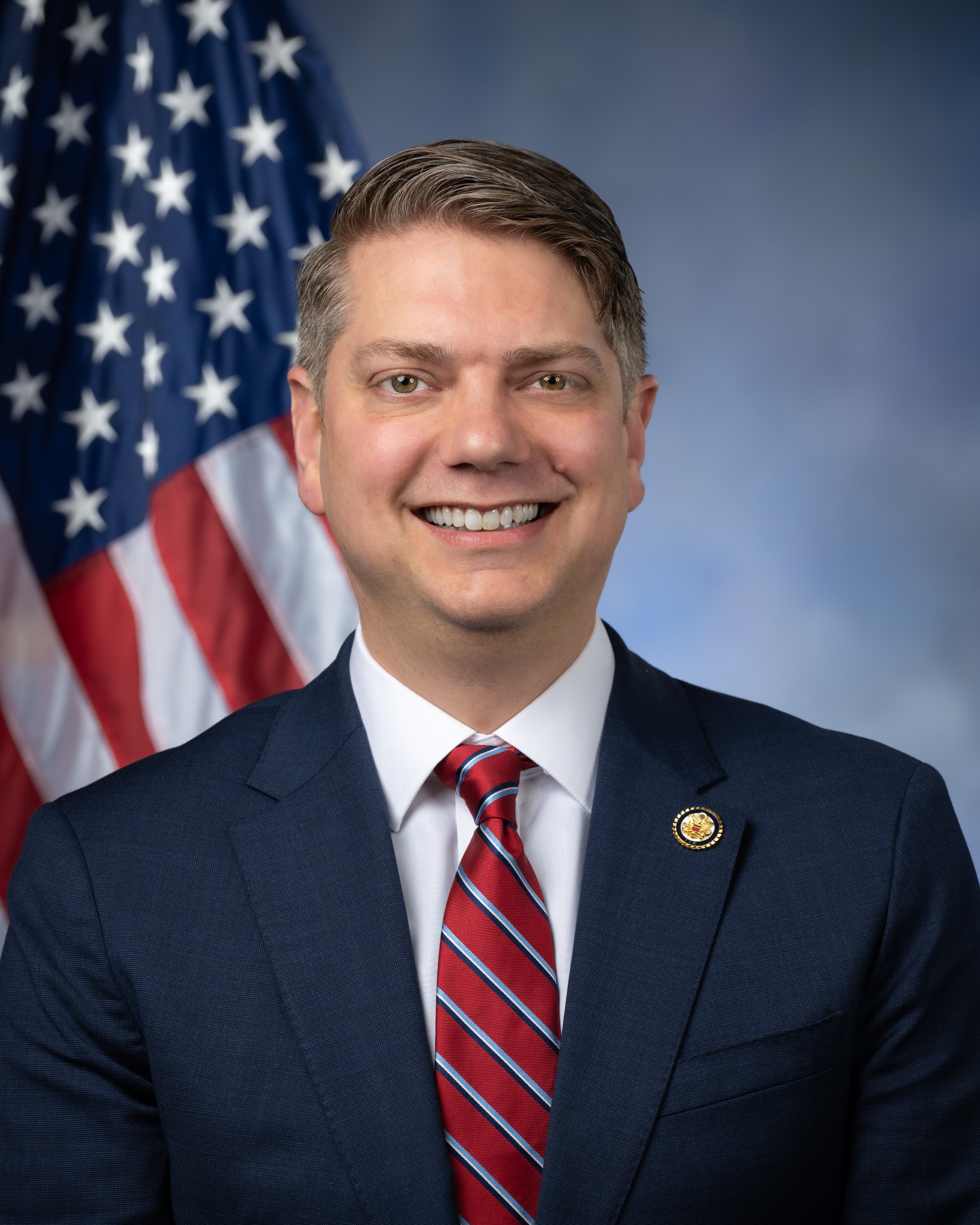
Discussing Effective Lawmaking with Alaska Congressman Nick Begich
Congressman Nick Begich represents Alaska’s at-large congressional district. Before entering Congress, he built a career as a technology entrepreneur and business executive while serving in numerous civic and policy leadership roles in Alaska. His work in Congress has focused on energy development, transportation, Alaska Native issues, election administration, and emerging technologies.
Congressman Nick Begich was born and raised in Anchorage, AK, until he moved to Florida to attend high school. He received a Bachelor of Business Administration from Baylor University in Texas and a Master of Business Administration from Indiana University Bloomington. He was recruited by Ford Motor Company in 2002, where he held positions in technology, finance, and product development. When he returned to Alaska in 2004, he started several businesses, including FarShore Partners, a software development company, and Dashfire, a startup incubator and investment firm. He managed Dashfire from 2009 until stepping down in January 2025 upon taking office in Congress. He is also invested in fostering the growth of early-stage companies by serving as a startup coach and mentor.
Rep. Begich has served his community in several capacities. He was the director of the Matanuska Telephone Association, the director and president of MTA Solutions, president of Alaska Policy Forum, co-chair of OneAlaska and the Alaska Republican Party, and a member of Baylor University’s Technical Entrepreneurship Advisory Board and Launch Alaska’s Selection Committee. For his work, he was awarded the Small Business Deduction Champion award from the National Federation of Independent Business and was in the Top 40 Under 40, a list published by the National Federation of Croatian Americans Cultural Foundation.
He serves on the Committee on Natural Resources, the Committee on Transportation and Infrastructure, and the Committee on Science, Space, and Technology. He is the Vice Chair of the Subcommittee on Energy and Mineral Resources and the Subcommittee on Railroads, Pipelines, and Hazardous Materials.
Since taking office in the U.S. House, Rep. Begich has focused on energy development, Alaska Native issues, election integrity, and digital asset policy. Just one month into his first term, the U.S. House passed two of Rep. Begich’s bills, which restored land rights to Alaska Native village corporations and made it easier for disabled Alaska Natives to qualify for federal aid programs. These bills passed nearly unanimously with bipartisan support and made Rep. Begich the first freshman member of the 119th U.S. Congress to have passed legislation in the House.
More broadly considered, throughout his freshman term in Congress, Rep. Begich has demonstrated practices of highly effective lawmaking, as documented in research by the Center for Effective Lawmaking. He has drawn on his experience in business and entrepreneurship to inform his policy agenda, in addition to continuing to build his expertise in complex policy areas such as energy, technology, and cryptocurrency. He works on committees that align well with, and complement his background in business and technology, and which help to shape Alaska’s economic future, while addressing Alaska’s unique infrastructure, transportation, and natural resource challenges.
On the importance of experienced staff:
“I think, you know, making sure that you’ve got a veteran team I think is really important as a freshman, and we were so fortunate to have had an experienced chief, an experienced legislative director, experienced legislative aides. that have domain expertise in their particular area. I think that’s really important as well. If your entire team is starting out, and everyone’s learning at the same time, it’s going to take a while before you can start to show results. Because everybody’s got a different learning curve, they walk in with no relationships, it makes that effort a lot more challenging. So, my… a lot of our success is because our team was ready to start on day one.” [This has direct ties to our research on the relationship between experienced staff and effective lawmaking in Congress (see Crosson et al., 2020)]
On building relationships:
“I think some of the best advice that I received early on, and I would give the same advice to anyone coming into a role in a legislative body for the first time, whether that’s a city assembly all the way on up to the United States Congress. Don’t make unnecessary enemies. there’s… a lot of these bodies, they come down to a couple of votes. Right now, it’s the tightest majority we’ve ever had in United States history in the U.S. House. And, there are… There are certainly policy differences between me and even some of my… some of the colleagues on my own side of the aisle, but certainly on the other side of the aisle. But that doesn’t mean that we can’t find ways to work together on areas of common interest. And I think, some members may come in and, they… they are coming out of an election where they’re throwing a lot of elbows, and elbows are being thrown at them. And they enter the body with that same approach, and that can really hinder your ability to move legislation forward later. You’re starting relationships off on the wrong foot. It doesn’t mean that you’re compromising your values, it doesn’t mean that you’re not still passionate about the things that you were passionate about when you were running, you certainly are. But it’s different. You’ve got to change gears when you get to the legislative body and roll up your sleeves and get to work.” [Cultivating a broad set of allies connects with our five habits of highly effective lawmakers].
On developing an agenda based in district needs:
“So the campaign ends, but the next campaign immediately begins, and that campaign is with Steering Committee membership. to make sure that they know what your priorities are, where you’re trying to be assigned… And we made a list of all the committees, and we went down and we scored those committees based on how important they were for Alaska, what were the legislative items that we wanted to achieve in our first term, and we went through and we made a list. We, you know, some committees are more sought after than others, right? Some they call A committees, B committees, C committees. And what’s important to understand about that is. While committees like Ways and Means, which handles tax, may be considered an A committee for a member. that may be less impactful for a state like Alaska than other committee assignments could be, or equally as impactful. And so, the historical committee assignments. for Alaska have been House Natural Resources and Transportation and Infrastructure, and they make a lot of sense for a young state like ours that didn’t get the original highway funding that the lower 48 states benefited from, that doesn’t have a lot of that port infrastructure that we need. There are a lot of things that we’re trying to play catch-up on, and the T&I committee assignment was a good one for that reason. Obviously, natural resources for Alaska, very important. for us, as sort of the leading resource, storehouse for the nation. Nearly every critical mineral on the critical minerals list. So there’s a lot… There’s a lot here in Alaska. 60% of the nation’s domestically caught seafood comes from Alaska. All these areas have a nexus with, with the House Natural Resources Committee.” [Developing a legislative agenda rooted in personal background, previous experiences, district needs, and policy expertise connects with our five habits of highly effective lawmakers].
On working with leadership:
“They need to become your friends. And, leadership decides, of course, in the House, it’s the House Majority Leader, decides what goes to the floor, meaning what gets a vote. And, just to orient folks. There’s well over 10,000 bills that are… that are filed each congressional session, plus or minus a couple thousand, and so, but the House does not pass all these bills, the House will probably pass around 1,000 bills, maybe a little less, in this Congress. So, right out of the gate, you’ve got a 10% chance of getting a bill actually out of the House, let alone getting through the Senate and into law… So, when you’re interacting with leadership, and you have, you have their ear, you want to make sure that you’re utilizing that time effectively, that you’re helping them with their priorities, that you’re being, you know, that you’re being constructive in the way in which you’re requesting assistance. And… most important, perhaps, of all, that you’ve already run the traps. So you’ve already talked with your subcommittee chairs, your committee staff. You’ve already talked to their staff, you’ve checked all those boxes before you have a senior conversation, because they’re going to just turn around and ask you, hey, did you talk to the following people? And if the answer’s no, well, you know what, you didn’t do your homework before you went to leadership on something, so… Value their time, make sure that you’re coming there with an ask they can say yes to, and make sure that it’s something that they know is going to be broadly supported, if possible.” [This coincides with Habit of Highly Effective Lawmakers #5 and the necessity of learning how to negotiate with committee and floor leaders as articulated in our New Member’s Guide, Being an Effective Lawmaker from Day One.]
On the importance of bipartisanship:
“… within the Congress, there’s a lot of different caucuses, right? So we hear about a couple of the main caucuses in Congress all the time, but there are other caucuses within Congress that create avenues for bipartisanship. So, for example, I’m a co-chair of the GEO caucus, right? So. for, for geothermal energy. This has a lot of applicability to Alaska, but a lot of other states as well, and it has bipartisan interests. You know, the Native American Caucus, right? I’m a vice chair in that caucus, the Western Caucus. You know, so these caucuses can be other avenues, aside from co-sponsorships, to achieve bipartisan engagement.” [The importance of bipartisanship for effective lawmaking is emphasized in our research].
Alan Wiseman (00:00:03):
Hello, my name is Alan Wiseman, I’m the Associate Provost of Strategic Projects and Professor of Political Science at Vanderbilt University. And along with Craig Volden at the Frank Batten School of Leadership and Public Policy at the University of Virginia, I’m the co-director of the Center for Effective Lawmaking. Today, we are very excited to welcome Congressman Nick Begich, who’s represented Alaska in the U.S. House of Representatives since 2025. Now, as many viewers know, Congressman Begich is Alaska’s at-large member, which means that he represents the entire state in the U.S. House of Representatives. Now, while he was born in Alaska, Congressman Begich pursued his higher education, the lower 48, earning his bachelor’s degree in business administration, or pardon me, his bachelor’s degree in business administration at Baylor University, and his MBA at Indiana University, before taking a position with the Ford Motor Company working on matters pertaining to product development, finance, and technology. Congressman Begich returned to Alaska in 2004, where he cultivated a wide range of companies, including Farshore Partners, which is a software development firm, and Dashfire, a startup incubator and investment firm that he managed from 2009 to 2025. Now, while still in his first term in the U.S. House, Congressman Begich has distinguished himself in comparison to his peers in a variety of ways in regards to his engagement with the legislative process. And according to our data at the Center for Effective Lawmaking, we’re especially excited to talk to Congressman Begich, because in his current… in the current Congress, at least as of late August 2026, He has thus far seen 13 of his sponsored bills pass the House. And seen six of his sponsored bills become law. That latter figure makes it so that he is tied with former member of Congress, Rep. Rick Renzi, a Republican from Arizona, who in the 108th Congress, which convened from 2003 to 2004, held the record for the most bills sponsored by a freshman member who became law in at least the last 50 years. So, all this is to say, Congressman Begich, thank you so much for taking the time to join us for one of our Conversations with Effective Lawmakers video series. We really appreciate your time.
Congressman Nick Begich (00:02:11):
Thanks for the opportunity, looking forward to getting into the detail.
Alan Wiseman (00:02:15):
That’s great. And as I alluded to in our earlier discussion before people came on, we’re going to be asking you a series of fairly general questions, but we’d really love to hear from you with some specific examples drawn on your own experiences to provide some context for some of the issues you’ve been navigating over the last year and a half in Congress.
Congressman Nick Begich (00:02:35):
Absolutely, looking forward to it.
Alan Wiseman (00:02:37):
Great. So all that said, what Craig and I would like to do is just, let’s start off with some questions about your background, and by that, I mean before you were actually elected to the U.S. House. to get a sense about how your background has shaped your time in Washington. So, you know, more specifically, start with the fact that you were born and raised in Alaska, you then moved to the lower 48 for high school, college, and graduate school, and then return to Alaska. And also, as some viewers might be aware, you come from a very, prominent political family in the state of Alaska, starting with your grandfather, pardon me, Nick Begich Sr, who had previously served in the Alaska State Senate before being elected to the U.S. House of Representatives. One of your uncles, Tom Begich, served in the Alaska State Senate, and another of your uncles, Mark Begich, served in the U.S. Senate, representing the state of Alaska from 2009 to 2015. So, with all that, it’s a pretty lengthy wind-up, I guess I’d be interested in hearing, you know, essentially, how is it, or how do you feel you growing up in Alaska, and the fact that this ultimately became the district that you represent, as well being so connected to such a prominent public and political family in Alaska, how’s this really shaped the way you view your nature of a job as a member of Congress? And I guess related to that, I guess, do you think it’s fair to say that voters might have a different set of expectations for you compared to, say, another elected official who might not have such close personal and or family ties to the state of Alaska?
Congressman Nick Begich (00:04:05):
You know, it’s a really good question, and just as additional background, you know, my parents divorced when I was young. I ended up being raised by my grandparents on my mother’s side of the family, and so while I always had and maintained that Alaska connection, my dad was in Alaska. you know, did not grow up around politics the way that the connection may imply. And so, you know, I kind of took a different track. I went on the business track, I was not, overly politically active, not any more than, say, someone who would be a member of a college Republicans club or something like this, but, So I kind of came to this from a different perspective, despite the fact that, you know, my family has been engaged in the political space in Alaska for a long period of time. You know, I do think, though, Alaskans have come to expect productivity from the members that they send to Washington. And of course, we saw that with my grandfather, and we saw that with Don Young, for so many years. just incredibly productive, members. We’re a small delegation, as people watching this probably understand. You know, we’ve got two senators and just one House member. And so, with a state that’s two and a half times the size of Texas. that is also a relatively young state, right? There’s a lot that’s not yet been done for Alaska, and so it creates an opportunity and some space for legislative productivity and a need for legislative productivity. And certainly, under the previous leadership that we’ve had representing Alaska and DC, I think that really sets the tone and has set the tone for Alaskans’ expectation of their one member in the United States House.
Craig Volden (00:05:56):
Great, we’re going to circle back to a lot of that, but first, let me second Alan’s thanks for joining us today, and continue questions on some of your pre-Congress background. As Alan noted, prior to serving in Congress, you founded Farshore Partners, a global software development company, and you were the co-founder of Dashfire, a technology company incubator. You’ve also helped numerous entrepreneurs of early-stage companies as a startup coach and mentor. In many ways, a member of Congress is starting up a small business, or being entrepreneurial, and I’m just wondering, you know, how does the advice that you are giving to entrepreneurs of small companies translate to the startup efforts for a new member of Congress?
Congressman Nick Begich (00:06:36):
It’s… that’s actually… that’s a great question, too. You know, it’s interesting because you’re 100% right. You start your office when you’re elected to Congress, you get the opportunity to pick your team. You are budget constrained, you are headcount constrained, which is absolutely congruent with the startup experience. You’ve got these products. And we call them bills, and these are your legislative products, and they need to be sold, right? And so, this is, again, this is very parallel to the startup experience. You incubate a concept, you come up with these products, you test them out in the marketplace, in this case the marketplace of ideas. And you go to work selling these concepts. And, of course, there’s a legislative pipeline, that’s what we call it, a legislative pipeline through which you progress these concepts. But at the end of the day, it’s very much like a startup experience. Now, there are some distinct differences, of course. When you’re a startup CEO, you get to call certain shots that you don’t always get to call when you’re in Congress, but I think the parallel is an apt description. That you make. You know, it’s… At the end of the day, you’re incubating concepts, you’re creating political, legislative products, and you’re selling those products into the marketplace of ideas, hopefully to become realized.
Alan Wiseman (00:08:08):
I mean, I really appreciate the parallels you’re drawing there. Once again, we’re going to touch on lots of those points over the next 30 to 45 minutes. You know, before we get into more granular aspects of, you know, how you really make things happen, I just, you know, wanted to harken back to some of my introductory comments, just noting the ways in which you’ve definitely hit the ground running, just even in your freshman term, when you were seated in January 25, such that now you’ve seen more of your sponsored bills become law than almost any other freshman representative for the past 50 years. So I guess broadly speaking, and we’ll get into a more nuanced treatment of these issues soon, but broadly speaking, what do you think are some of the main keys to your lawmaking successes during your freshman term thus far?
Congressman Nick Begich (00:08:51):
You know, it’s… it’s interesting, because… you think 2 years is a long time when you’re first starting out as a freshman, but the time goes by exceedingly quickly. Exceedingly quickly. So, you know, if you want to get something done, say, in the middle of your term, you have to start that something at the beginning of your term. Because bills don’t generally just sail on through Congress. You’ve got a committee process, a subcommittee process. Some bills get multiple referrals to multiple committees. You’ve got the process of making sure you’re working with the majority and the minority, and making sure that you’ve got enough support in the other body, right? You’re in the House, you can maybe move some things out of the House, but it has to have support in the other body, and there’s some effort that goes into that process as well, and so, you know, I think starting early, starting at the beginning of Congress is important. I think, you know, making sure that you’ve got a veteran team. I think is really important as a freshman, and we were so fortunate to have had an experienced chief, an experienced legislative director, experienced legislative aides. that have domain expertise in their particular area. I think that’s really important as well. If your entire team is starting out, and everyone’s learning at the same time, it’s going to take a while before you can start to show results. Because everybody’s got a different learning curve, they walk in with no relationships, it makes that effort a lot more challenging. So, my… a lot of our success is because our team was ready to start on day one. I think, also important, building relationships before you need a relationship. And, you know, making sure that you’re there, looking for opportunities to help other members, and just getting to know people, right? Going out for a cup of coffee, going out to dinner with somebody, understanding what their priorities are, and listening. And I think that’s… that was a key, key, success factor for our office as well.
Craig Volden (00:11:00):
I’m interested kind of in that day one aspect, right? What you hit the ground running with, and partly also what advice you received. Now, there are, you know, kind of endless freshman orientation opportunities and all kinds of advice that were probably being offered from all directions. It used to be that, you know, the advice was… you know, take your time, don’t… don’t rock the boat, you know, all of that sort of thing, but you’ve taken a different approach to just dive right in, and can you tell us what the orientation messages were, what resonated with you, what you took away from that, and what you said, no, we’re just going to go our own direction?
Congressman Nick Begich (00:11:38):
Well, I’ll tell you, you know, the… little backstory on our orientation. So, my race was one of the last races called in the country. And, in fact, I didn’t even have a laptop for orientation until, I think, the last day, or the second to last day, because we weren’t issued some of these materials until our races had been called. In fact, my race was called so late that I didn’t even enter the freshman lottery for office space. So, so we were very busy monitoring the election. I was down in DC for the orientation, but we were spending a lot of our energy you know, focused on what was happening back in my home district, which is the state of Alaska, and 4 hours behind East Coast time, thousands of miles away. And so, unfortunately, I did not have the full orientation experience that perhaps members who come from safer districts and primaries that are far earlier in the election cycle than Alaska. So, but I will say, getting back to the heart of your question, with respect to advice. I think some of the best advice that I received early on, and I would give the same advice to anyone coming into a role in a legislative body for the first time, whether that’s a city assembly all the way on up to the United States Congress. Don’t make unnecessary enemies. there’s… a lot of these bodies, they come down to a couple of votes. Right now, it’s the tightest majority we’ve ever had in United States history in the U.S. House. And, there are… There are certainly policy differences between me and even some of my… some of the colleagues on my own side of the aisle, but certainly on the other side of the aisle. But that doesn’t mean that we can’t find ways to work together on areas of common interest. And I think, some members may come in and, they… they are coming out of an election where they’re throwing a lot of elbows, and elbows are being thrown at them. And they enter the body. with that same approach, and that can really hinder your ability to move legislation forward later. You’re starting relationships off on the wrong foot. It doesn’t mean that you’re compromising your values, it doesn’t mean that you’re not still passionate about the things that you were passionate about when you were running, you certainly are. But it’s different. You’ve got to change gears when you get to the legislative body and roll up your sleeves and get to work.
Craig Volden (00:14:05):
Yeah, that pivoting from the election cycle to governing seems crucial, and crucial to do, apparently, on the hour, in your case, right? As soon as you found out that you won. You know. Is that a tough thing? I mean, it sounds like it wasn’t that tough for you, but for others to make that switch?
Congressman Nick Begich (00:14:27):
I think it can be tough, because the election process is inherently emotional. You know, you’re putting yourself out there, you’re fully exposed, your whole history is exposed, anything that you’ve ever said, maybe you’ve taken out of context, but… you know, there’s a particular public perception, and particularly when you come, as I did, from the business side, where reputation is so important. And then you see your reputation assailed, during a campaign process, it can be, pretty disruptive. But all, you know, from my personal, you know, private sector experience, you know, the world that I came from, you can’t hold onto things for very long, you don’t have the luxury of that. And so, you’ve got to be able to move beyond that emotional, Backdrop, and remember that you were hired for a job. You were hired by your constituents for a job. And, you know, you need to be focused on that, not yourself.
Alan Wiseman (00:15:27):
No, that’s a… that’s a pretty clear articulation of your perspectives on that, Congressman. I want to shift gears slightly To actually tie back to your background in the tech center, actually, in the tech sector, pardon me. So given your background, both in terms of starting up companies and just nurturing companies along, and turning to the growing use of AI in, really, everyday life. I’d be curious, given your professional expertise in these areas, you know, are there any ideas that you think that you could actually offer from that perspective to perhaps grow the capacity of Congress to serve its foundational representational roles in the U.S. government?
Congressman Nick Begich (00:16:06):
You know, I love technology, okay? And technology, has changed the course of human history in a very clear and obvious way. When I came to Congress. Anyone who’s walked the halls of the congressional office buildings will see that there are these mail chutes. Right? And these mail chutes, they still exist, and I actually asked some of the folks that work for the architect at the Capitol, why are these still here? Well, they’re sort of a… they’re a hallmark, they’re a throwback to how we used to do business. Right? What we used to do is we used to write letters to each other, and maybe… and then eventually we started typing letters to each other, and then we found a more efficient way. They actually had pneumatic tubes in a lot of these buildings that they would use, just like at a bank. teller, and you would send things through the pneumatic tubes, and there’s these mail chutes, and we found some more, efficient ways to communicate. And at the dawn of the internet, and email, and instant messaging, and now cell phones, and then… now here comes AI. So, it’s a natural progression within the Congress to adopt technologies that become what I call force multipliers. for the members of Congress, because as I mentioned at the outset, we’re budget-constrained. We don’t have unlimited budgets. There’s a certain amount of money that is allocated to each congressional office. Through legislative appropriations. And, that’s what you get. That’s what you get every year, and you’ve got to decide on your own, as the CEO of your… of your office and startup. Where is that money going to be allocated? How’s it going to be split between your district and between your legislative team? How much are you going to invest in communications, and so forth? So, so, when you are under a budget constraint, utilizing technology is an important mechanism to make sure you’re getting the most out of your human capital. And AI certainly is one mechanism to help achieve that. Now, I’m on three committees and eight subcommittees, which is a particularly heavy load in the House. I was initially assigned to two committees. And I asked for that third committee assignment, because I said, I think we can do more in our office. So we asked for the Science, Space, and Technology committee assignment in addition to House Natural Resources and Transportation and Infrastructure. But it definitely increased the load on the team. So, AI is a great tool. Obviously, we all know that, you know, you need to watch the outputs, make sure that they’re accurate, make sure that they are reflective of policy that you believe in, that they set the right tone, etc. But we do utilize that, and I’ll tell you a great example. of how we utilize AI in our office. You know, when you’re preparing for a committee hearing you may be, presented with hundreds of pages of testimony and additional ancillary information. And when you’re like me, and you’re assigned to, to 8 subcommittees and 3 primary committees, that does not leave a lot of time for preparation. So, AI can be a way to pull out the salient points that you need to pick up. It can be a great thought starter for questions that you may want to drill down on. and provide some more synopsized biographical data of some of the witnesses that you’ll be speaking with. So certainly, that’s one use case. There are many use cases for using AI as a force multiplier, but I think just like technology has been utilized and adopted throughout the Congress over our 250-year history, this is the next iteration of that.
Craig Volden (00:19:53):
Thanks, that’s really helpful to hear some of your experiences there, and I imagine it’ll keep on… keep on changing and evolving. Haven’t seen the pneumatic tubes recently as I used to. I’d be interested, when we think about, now, kind of in the weeds of the specific bills and specific proposals that you’re putting forward, some of our work at the Center for Effective Lawmaking has suggested that a focused agenda is often really helpful to become an office. That’s kind of the go-to office in an issue area or two. At the same time, members are pulled in just so many different directions on everything they have to vote on. and so on. When we look at your bills, most of them seem to align pretty nicely with the committees you’re on, and with a focus on Alaska issues, as you were talking about earlier. How do you maintain some degree of focus when pulled in so many different directions?
Congressman Nick Begich (00:20:48):
Yeah, so it’s… it’s interesting, too, because here I am. I’m the one member of the U.S. House for Alaska, so unlike certain other states that maybe can split the portfolio of legislative priorities among multiple members, right? If you’re from Texas, you’ve got dozens of members, California, Florida, New York. They can really afford to drill down and say, okay, this person’s going to be our healthcare expert, our financial services expert, our resources expert. But, as the sole member for an entire state in the House, it’s partially my responsibility to be sort of a jack-of-all-trades, an expert in a number of areas, and so that does add a little bit of strain to the position. That said, you’re 100% right. You know, one of the things I learned relatively early in my freshman experience was that if you’re not on a committee, it’s very hard, it’s not impossible, but it’s very hard to move a bill through a committee that you’re not on. If you’re on a committee, you get prioritized, or you tend to get prioritized by that committee’s leadership team, so the committee staff will be more willing to work with you on your bills. after all, you know, you represent, you know, a voice and a vote on that committee. So, it is challenging. We are attempting to do this. We’re attempting to move a couple of bills through other committees. But your best bet is to focus on the committees to which you’ve been assigned, and to do your best to become a subject matter expert on those committees of jurisdiction that you’re on.
Alan Wiseman (00:22:26):
Well, that’s really helpful for where I wanted to go next, Congressman, because, you know, Craig and I, having studied quite a bit about the previous or two members of Congress ago, Don Young, we know how highly specialized he was in terms of matters of natural resources, transportation infrastructure, and as you said, you know, an incredibly productive and successful member advancing his agendas. You know, in thinking about you as a newly elected member, in terms of trying to align your policy interests for the state, as well as your own personal expertise with your committee assignments, I think viewers would really be interested in hearing, just to get in the weeds a little bit. what is the process by which members actually secure their committee assignments? And you already noted how you were successful at securing a third committee assignment in SS&T, in addition to transportation, infrastructure, and natural resources. I mean, how… practically speaking, how difficult is that, where the rubber hits the road?
Congressman Nick Begich (00:23:22):
I’ll tell you what, inside of Congress, you have something called the Steering Committee, and the Steering Committee steers members to their committee assignments, and they help make determinations on, or they do make the determinations on who gets assigned to a committee, who gets assigned to a subcommittee, who becomes those committee chairs. And a lot of that is based on what’s your expertise when you walk in, what is the nexus of those committees of jurisdiction with your district that you represent. what kind of a member are you going to be? You know, there are some members that are more well-suited to the dynamics of a judiciary or an oversight committee, where it can be a little bit more combative. Other committees are more roll up your sleeves and figure out how to get to the finish line, and that’s more like a transportation and infrastructure committee that can be relatively bipartisan in comparison to the other two committees I just mentioned. So, so there’s sort of a… what’s a good fit for the personality, and then there’s actually a campaign within the campaign. So the campaign ends, but the next campaign immediately begins, and that campaign is with Steering Committee membership. to make sure that they know what your priorities are, where you’re trying to be assigned. And so, when I came into Congress, we went through, I got my chief and, and a couple other members that I knew were going to be likely on my team. I hadn’t even sworn into office yet. We found a whiteboard in an off-campus space. I didn’t have an office, didn’t have anything. And we made a list of all the committees, and we went down and we scored those committees based on how important they were for Alaska, what were the legislative items that we wanted to achieve in our first term, and we went through and we made a list. We, you know, some committees are more sought after than others, right? Some they call A committees, B committees, C committees. And what’s important to understand about that is. While committees like Ways and Means, which handles tax, may be considered an A committee for a member. that may be less impactful for a state like Alaska than other committee assignments could be, or equally as impactful. And so, the historical committee assignments. for Alaska have been House Natural Resources and Transportation and Infrastructure, and they make a lot of sense for a young state like ours that didn’t get the original highway funding that the lower 48 states benefited from, that doesn’t have a lot of that port infrastructure that we need. There are a lot of things that we’re trying to play catch-up on, and the T&I committee assignment was a good one for that reason. Obviously, natural resources for Alaska, very important. for us, as sort of the leading resource, storehouse for the nation. Nearly every critical mineral on the critical minerals list. More, estimated, oil and gas has not yet been tapped in any other state in the country. There’s a lot here, and I’d like to joke with people, but it should be obvious when I say it. We have more trees in any state in the country, and you know, should have a thriving timber industry. Don’t right now, but we need to change that. So there’s a lot… There’s a lot here in Alaska. 60% of the nation’s domestically caught seafood comes from Alaska. All these areas have a nexus with, with the House Natural Resources Committee.
Craig Volden (00:26:53):
So you get your committee assignments, and you have all these ideas to move forward, and then you come in, but you’re a freshman, and so you still need to get the attention of committee chairs, subcommittee chairs, party leaders to get your bills moving a little bit through the process. Can you tell us a little bit about what it takes to do that, and, you know, is there an element to which, you know, having come from an at-risk seat actually matters to get their attention? Maybe they want a Republican to be re-elected?
Congressman Nick Begich (00:27:24):
I think that… well, I think that matters, and I think… but what it really requires, I’ll say, is initiative. Because, you know, coming into the Congress. can feel daunting. You know, a lot of the people that you’re meeting for the first time, you’ve only seen on the TV, and so these are big personalities, and, and, you know, if you’re somebody who follows politics, they can be, you know, political stars, perhaps. But, at the end of the day, they’re your colleagues. They need to become your friends. And, leadership decides, of course, in the House, it’s the House Majority Leader, decides what goes to the floor, meaning what gets a vote. And, just to orient folks. There’s well over 10,000 bills that are… that are filed each congressional session, plus or minus a couple thousand, and so, but the House does not pass all these bills, the House will probably pass around 1,000 bills, maybe a little less, in this Congress. So, right out of the gate, you’ve got a 10% chance of getting a bill actually out of the House, let alone getting through the Senate and into law. So, so it can be pretty… pretty unusual to even get one bill through the House, and there’s, quite honestly, we won’t name any names. Your organization does that well, but there are, there are a number of members that have been in the House for… in some cases, decades, that haven’t passed not only a bill into law, but a bill out of the House. And so. You know, and this kind of goes back to what I said earlier in our discussion, how important it is to start off on the right foot with the members. Particularly leadership, because leadership is going to determine whether your priorities ultimately get prioritized relative to that… those 10,000 plus bills that are ultimately going to be filed. Now, I think it’s important, too, because if you think about a member of House leadership, I’m talking the Majority Leader, the Speaker, the Majority Whip, the Conference Chair, right? These folks, they have limited time, just like we all do. And there are members of Congress that treat their relationship with leadership as though it’s the technical support line for Congress. So, they’re on the phone, they’re texting, they’re constantly, poking at leadership. That’s one way to get attention, but it’s a great way never to pass a bill. So, when you’re interacting. With leadership, and you have, you have their ear, you want to make sure that you’re utilizing that time effectively, that you’re helping them with their priorities, that you’re being, you know, that you’re being constructive in the way in which you’re requesting assistance. And… most important, perhaps, of all, that you’ve already run the traps. So you’ve already talked with your subcommittee chairs, your committee staff. You’ve already talked to their staff, you’ve checked all those boxes before you have a senior conversation, because they’re going to just turn around and ask you, hey, did you talk to the following people? And if the answer’s no, well, you know what, you didn’t do your homework before you went to leadership on something, so… Value their time, make sure that you’re coming there with an ask they can say yes to, and make sure that it’s something that they know is going to be broadly supported, if possible.
Craig Volden (00:30:51):
I wonder if you can give us one example. You’ve had some successes in running those traps and doing all of that. Is it a hard thing to do, easy thing to do? Why aren’t more.
Congressman Nick Begich (00:31:01):
Well…
Craig Volden (00:31:01):
That type of thing? You know, how do you, how do you.
Congressman Nick Begich (00:31:03):
It can… it can be hard… I’ll tell you what happens, and I’ll give you an example in detail, but let me just… let me just say this generally. It can be difficult sometimes, because we all love our own ideas, okay? If we didn’t… if we didn’t love our ideas, we wouldn’t have the idea, we wouldn’t try to… try to sell the idea. But, you kind of have to read the room and know what’s possible. That’s… that is a core… success factor in whether you’re going to get something done. So, there are members of Congress on all sides, that will fall in love with an idea, and they will only push that concept, and despite evidence to the contrary, in a particular political environment, they will fail to recognize that they need to focus their limited time and energy on something else. Maybe they’ll come back to this idea when the environment is more favorable toward that concept, or maybe they need to workshop it a little bit more with Committee, or industry, or stakeholders, or folks back home who can help refine that concept to the point where it can actually become law. But, but I think that’s really important, prioritizing, the… what’s possible, right, with what you want. You know, those two things are not always going to line up. Oh, and getting back to the example, yeah, I said I would tell you an example. I’ll tell you, the bill… that provisions that I’m most proud of don’t have my direct name on it. But these provisions came directly from my office, they came directly from conversations that I had with leadership, and they came from conversations I had with leadership before I was even sworn into office. So I’m down in DC. I am, sort of halfway in on, freshman orientation. The race hasn’t been called yet. But, Steve Scalise, who’s the majority leader, came up to me and he said, hey, Nick. We’re going to take care of ANWR. ANWR is the Arctic National Wildlife Refuge. Alaska was promised many years ago that the prospective oil and gas regions of that area of the state would be able to be explored, and we haven’t really fulfilled that promise fully. And he said, look, we’re going to take care of Alaska. We know how important that is for Alaskans to be able to, to find out what’s there, right? And so, I said, respectfully, sir, and this is just a… this is a brief interaction, it’s my first time meeting Steve Scalise in person. I said, respectfully, sir, there’s a lot more that we would like to do beyond that, and I’d like to meet with your team and talk about it. And he said, great! He seemed a little surprised, because we’d just… we’d just shaken hands for the first time. But he said, I want you to meet with my policy team, things are very busy, but why don’t you sit down with my policy leads and have this conversation. So what we did, myself and my team, we went around to all of the, sort of. thought leaders who had been a part of the Alaska delegation over many decades. And, you know, you can think of them, these are the graybeards. These are the guys who really, you know, they identified the priorities years ago, they worked them hard while they were on staff, whether that was committee or for a member. And so they know the issues inside and out. And what we did was we said, hey, we have… we’re time-limited, because we’re going to have this meeting in a couple of days, but I want your wish list. And I had my wish list, of course, and the wish list of people that I had met on the campaign trail, but I said, what are the things that you thought we’d never be able to get done, but if we could get done. it would change the state of Alaska for the better. And so we got a list, we condensed and consolidated the list, we prioritized the list, and then we sat down with Steve Scalise’s policy leadership team, and walked through about two and a half pages of single-space concepts that we’d like to work on together. And they said, you know, we’ve got the budget reconciliation bill coming up, but we’ve been working on it since last May. And I said, well. Respectfully, I wasn’t here last May. And so, you know, I’m here now, and I have these ideas now, and I would like the opportunity to try to integrate this as we’re working through budget reconciliation. So they said, okay, we support where you’re trying to go, we’re going to support you with the committee. The Committee for House Natural Resources, fantastic team, can’t say enough good things about that team, they’re absolutely incredible. And we worked with them and collaborated on some changes and some additions, significant additions for the state of Alaska. That worked their way into the committee-introduced text. And let me just say, for folks that are out there listening. The best way to get something into a bill that’s going to pass is make sure it’s part of the bill from the beginning. If you’re trying to add things in with amendments, yes, it can work, and we’ve had success with that ourselves, particularly on the Transportation and Infrastructure Committee. at moving Alaska Priorities through that mechanism, but the best way to get things done is make sure that it’s part of the introduced committee text. And so we worked closely with the committees. the committee leadership to make sure that Alaska had its own title, its own title, in the House Natural Resources text that was part of the budget reconciliation bill last year. Now, what did it do? Okay? Here’s what it did. When Alaska became a state, we had a compact with the federal government that we would get an outsized share of federal royalties on oil and gas prospects on federal land. Well, that’s been… that was reneged upon, okay? So we’ve never gotten what was promised to the state, and it’s kind of been a thorn in our side for a long time. Because that was… that was… our vote was sort of predicated on these sets of promises. So our vote to become a state within the state, you know, the citizens of Alaska said, yes, we want to become a state. In part because the federal government made the following promises. Well, this is one that they did not deliver on. And so. Through the budget reconciliation process, we were able to change that, formula from 50-50 to 90-10 in favor of the state, and that was the House product. Unfortunately, it changed to 70-30, but it was a significant improvement over the 50-50 split that we had previously had. So, we were able to make major progress on that. for the people of Alaska, and quite frankly, people before me said that will never happen. We will never be able to make that change. And we found a way to do it through a budget reconciliation mechanism. We also were able to open up ANWR, as was discussed with the Majority Leader at the beginning of the whole process. for mandated oil and gas sales in the 1002 area, which is that one prospective area, as well as the National Petroleum Reserve, Alaska. And what we did. It’s about 30 million acres. 30 million acres, which, you know, it’s a big number. What does that mean? Well, it’s roughly the size of the state of Florida. Now, remember, Alaska, two and a half times the size of Texas. We’ve got a lot of land up here, 365 million acres. But, we were able to take the Petroleum Reserve, which was set aside by Congress in the 20s. Right? Not these 20s, 100 years ago, okay? For the purposes of oil and gas. development, and we were able to mandate lease sales over the next 10 years as part of the budget reconciliation process. We had the very first sale as a result of that, and we brought Exxon back to Alaska, and we brought Shell back to Alaska, because people are interested in the durable reforms we were able to make. with the budget reconciliation bill, as well as some follow-on Congressional Review Act actions that I led in the House That repealed some of the previous, regulatory regime that had been applied, under the last president to Alaska.
Alan Wiseman (00:38:56):
Great, thank you so much for those examples and illustrations, Congressman. I want to turn it back to some broader lessons or best practices in effective lawmaking, so to speak. So, according to some of our research at the Center for Effective Lawmaking. Craig and I and several of our co-authors have found that bipartisan lawmakers tend to be more successful at advancing their sponsored bills through the… further through the legislative process than those who essentially try to go it alone, either with only members of their own party or no co-sponsors at all. It was interesting, you know, if we look at your legislative record thus far, many of your sponsored bills actually don’t attract co-sponsors of either party, and actually none of the sponsored bills that you advance that became law have any Democratic or Republican co-sponsors attached to them. So, you know, I’d really be curious to hear your perspective on what you see as the advantages or potential disadvantages of bipartisanship in Congress, especially in light of the razor-thin or historical margins that you’re describing in the current 119th Congress and the House. And I guess related to that, even absent co-sponsorship coalitions, I mean, how have you gone about trying to build lawmaking, or pardon me, how to go about lawmaking and building support for your proposals, both within your party and across parties?
Congressman Nick Begich (00:40:14):
So, it’s a great question, you know, within the Congress, there’s a lot of different caucuses, right? So we hear about a couple of the main caucuses in Congress all the time, but there are other caucuses within Congress that create avenues for bipartisanship. So, for example, I’m a co-chair of the GEO caucus, right? So. for, for geothermal energy. This has a lot of applicability to Alaska, but a lot of other states as well, and it has bipartisan interests. You know, the Native American Caucus, right? I’m a vice chair in that caucus, the Western Caucus. You know, so these caucuses can be other avenues, aside from co-sponsorships, to achieve bipartisan engagement. Co-sponsorships are also, in my… and this is… this is my estimation, been my experience, sometimes co-sponsorships can be messaging opportunities on certain kinds of legislation, so legislation that may not have a full opportunity to become law can attract a lot of co-sponsorships, because people want to send a message or make clear that they stand on a particular issue, to voters and say, hey, look, you know, this is where I stand. Will the bill go further than this? Don’t know, but, you know, here we are. Sometimes co-sponsorships can be a mechanism… a signaling message to leadership on committees to say, hey, please prioritize this bill. Now, what I will say as well is… going back to something that I mentioned earlier, when… when you have some members that have never passed a bill into law. running around Washington saying that you’re passing bills may not be the best way to maintain positive relationships with all of your colleagues. So, you know, these bills that I’m passing into law, they’re… specific to my state. They’re specific to my district. And so, it’s unlikely that someone from Alabama would be interested in supporting you know, a land transfer package in southeast Alaska, for example. Why would they come in here and support that? I mean, they certainly could, and we’d welcome their support, absolutely, if they want to co-sponsor it, but I think people look at Alaska, and they say, Alaska’s unique. It’s different. We’re gonna try not to weigh in on their internal political matters, and if there’s a mechanism for bipartisan support for some of the bills that are more fundamental, let’s let’s let that go. And so, this is one of the things that has really surprised me, though, speaking broadly on the topic of bipartisanship. If we get all of our information, not news, but all of our information from what we consider to be the news, you would think that there is zero bipartisanship in Congress, but the reality is, and I don’t know, you probably have the statistics on this, or could easily dig them up. I think more than 90% of the bills that pass the House have bipartisan support. And so, that really shocked me when I came to Congress, because I thought, I was under the impression That everything was partisan, and there was very little crossover, but the truth of the matter is there’s fundamental blocking and tackling that happens on a daily basis when you’re in session, and bills are going through that, that have bipartisan support. And we’ve been able to identify what those opportunities, for bipartisan support are.
Craig Volden (00:43:48):
I’m glad you mentioned that, and I think you have this statistic just about right there on the degree to which things remain bipartisan, especially on the items that move forward. You had mentioned caucuses, and I’d love to get your opinion of one, that you’re involved in the Republican Study Committee. Can you tell me what they do, and how it helps with the lawmaking process?
Congressman Nick Begich (00:44:11):
Absolutely. So, Republican Study Committee is the largest Republican caucus in the House, and it is a… it’s a fantastic, it’s a fantastic caucus, because some… some caucuses are… you know, sort of people come together and they break apart in a future con… Congress. They don’t necessarily last through Congresses. This is an older group that has had opportunity to mature. They have their own full-time staff. And so, in that sense, they’re a well-organized caucus that informs policy-making. And so, it’s a great opportunity. They bring people in for lunches and other things that are senior officials in the administration, people from the Department of State, right? You’ve got people from the military that come in and provide briefings and information that informs your policymaking and your decision-making process. They can also be really good advocates at, at sort of paving the way for legislation, and a great forum for you to be able to present your legislative priorities to colleagues, and get co-sponsorships if that’s something that you’re interested in. You know, they’ll literally send around sometimes a bill in an RSC meeting and say, hey, will you sign now and co-sponsor this bill? You know, again, when you’re in Congress and you’re trying to, to sell your idea in that marketplace of ideas and be prioritized, these can be great forums to talk to a lot of your colleagues at once. you know, some folks, and I’ll tell you, this was really interesting to me coming to Congress as someone who didn’t come from a previous political, set of experience. when you’re watching C-SPAN, and you’re seeing particularly a committee hearing, but even on the floor, you think, where’s all the members of Congress? Why aren’t they sitting in the hearing, right? I’m sure everyone’s had that moment when they’re looking at a hearing, and they say, that place is empty. No one’s doing anything. That it couldn’t be further from the truth. That could not be further from the truth. when you’re assigned, as I am, to 3 committees and 8 subcommittees, you’re supposed to be, and I’m kidding, and it’s no joke. 4 or 5 places at once sometimes. Literally, you are scheduled 4 or 5 places at once. You do your 5 minutes in one place, boom, you gotta be up and go to the next place. And so, There’s… why do I say that? Because there’s very few places and moments in Congress where you can talk to a lot of people at once who are your colleagues, right? Lots of opportunities to be in front of a camera. But your colleagues may not be there, so RSC and groups like those provide an opportunity for you to talk to multiple… many colleagues at once, and try to engage them in your priorities.
Craig Volden (00:46:55):
Thanks, I really appreciate that context. And, you know, we’ve been talking a lot about building coalitions and connections in the House. Could you give us a brief now? What do you do with the Senate? What do you do with the President? How do you make sure things get over the finish line?
Congressman Nick Begich (00:47:11):
You got it. So, in the House, there’s an Office of Legislative Affairs for the Executive Branch, and they have representatives that are there on the House floor. You have opportunities to talk with your representative from the White House, and of course. They’re supposed to be there to be the advocate for the White House, but also an advocate for you in interacting with the White House and that executive team to say, hey, this is important to this member, here’s why, and if you do a good job building a relationship with them they can assist you in making sure that your priorities are getting through. You remember what I said earlier about, some members of Congress treat leadership like they’re the technical support line? Well, they do the same thing, some members. do the same thing to the executive branch. And so, here again, if you’re… if you’re a frequent flyer on the phone 24 hours a day, you know, you’re going to get attention, but it may not be the attention that you actually want when it comes time to get your legislation into law. I think it’s really important, too, to, if you see real opportunity for passage, make sure that you’re pre-flighting what could ultimately be sent to a president’s desk. to make sure that it’s not going to get vetoed, right? I mean, I think you’ve got to do your homework there, because if someone sees your piece of legislation for the first time, it would only take one person in that reporting chain to say, I don’t like this bill, or I don’t like this person. Okay? And when that happens, now your bill’s on the wrong trajectory, legislatively. So, it’s a great opportunity, great interface. Of course, when you’re from, again, a state like Alaska, one of the few states with only one member of the United States House. You’ve got to have a working relationship with your senators, because they’re going to shepherd a bill through… Through the Senate, and make sure that it gets to a president’s desk. Now, the same thing is true for the Senators. We’ve got to… they’ve got to have a good relationship with the House member, because they’ve got to be able to shepherd their bills through the House. And we’ve had a good relationship with our Senators in being able to help, I call it Sherpa. the bill through… bills through committee to make sure that they’re prioritized, just like they would be if they were our bills. We also make sure, and this is a really important point that I think gets missed so often. You end up with competing versions of bills. Okay, so even slight changes between a House version and a Senate version can doom a bill unless it’s exceptionally high priority. And so… on those blocking and tackling pieces of legislation, you’ve got to do the work with your Senate counterparts to make sure that what gets introduced in the House and the Senate match up almost, if not exactly, word for word, so that when they’re passed. they don’t have to come back to one of the bodies. They go straight to the president’s desk. When someone wants to put their stamp on a bill, and they change it, that’s when you can run into a real challenge in terms of being able to actually pass something into law, because there’s not enough time to take the bill back up in the other body with the changes.
Alan Wiseman (00:50:35):
Well, I mean, we covered a ton of ground here, and I know the viewers, and the students in particular, are going to really gain a ton out of this, just hearing your perspectives on, really, the What happens under the hood, so to speak, in a lot of these legislative processes. All that said, we want to be mindful of time, and because of the fact that the Center for Effective Lawmaking is located at Vanderbilt University and the University of Virginia, which are both academic institutions, we wonder if you have any further particular advice to share, or insights to share with college students in particular, and those who might be thinking about public service, especially.
Congressman Nick Begich (00:51:09):
Well, yeah, absolutely. Look, I was a college student once myself. at the undergrad and the graduate level. And I would say this, you know, don’t be afraid of a winding path, right? There’s a… there’s a whole lot of experiences that can be complementary to a career in public service. Some of you will start your career in a political or government space. Some of you will not. Some of you will start that career on the business side, you know, doing something else. That’s okay, right? There’s a lot of different ways, to… to end up where you might want to end up. I think what’s important, too, is You know, be diligent, but don’t be in a rush. Because when you’re young, it can often feel like, the world is passing you by, you’re maybe watching a colleague or a friend from a class that you were in, or someone that was in, you know, a dorm that you were in, and you say, oh, they’re doing so great, you know, and you try to start to compare yourself to that person. Be happy for that person, but focus on your own career trajectory and doing a good job where you are. People will notice, and over time, that will accumulate. I like to compare sometimes what happens in life with what happens in finance. If you know what happens with the power of compounding returns. If you put $1,000 in your savings account, or I should say an investment account. when you’re first born, that’s going to be worth a lot 65 years later, right? It’s not going to be worth a lot a year from now, or even 10 years from now. It takes time to build those experiences. And your experience in the professional setting will also compound in similar ways. And if you’re diligent, and you’re making sure you’re showing up every day, you’re finding ways to add value, you’re building relationships, you’re finding those opportunities to deliver. Those experiences and that track record will compound, just like a portfolio on the finance side compounds, and at the end of your career, you’ll look back and you’ll be amazed at the things that you’ve achieved. things you never perhaps thought would be possible or seemed like they were such distant objectives. But I would say, you know, be diligent, don’t be in a rush. And focus on what’s in front of you.
Craig Volden (00:53:34):
Really appreciate that perspective, and want to thank you for your public service, and for answering all of our questions. That said, since we were asking the questions, maybe we left something out. Was there anything that we should have been asking you about effective lawmaking, or anything else you wanted to add?
Congressman Nick Begich (00:53:50):
I think these are… I think these are a great set of questions. You know, I think just to recap, you know, Congress really is like a startup, and any legislative office is going to be like a startup. I would say, you know, when you come in, remember, build relationships from the beginning. Don’t make unnecessary enemies. Remember that one day you may be in the minority, one day you may be in the majority. You’re going to need support on both sides of the aisle. Doesn’t mean you compromise your values. Don’t do that. But, but build the relationships, because there’s a lot more common ground than is… than makes the news. And, when you’re in the job. it becomes apparent that that’s true. You know, at the end of the day, we’re here for a short period of time, and what I told my team when we started, just day one, I said, look, we didn’t get hired for a 20-year contract, we’re on a 2-year contract. And we’re going to deliver everything that we possibly can in those two years for the people who sent us to Washington. And I think that’s important, too. Remember that time is not unlimited, and it’s also not your friend. When you finally get to the point where you’re elected and you’re elected to deliver. Don’t hold anything back. Do everything that you can, because you may never get the opportunity again in your lifetime, and you never want to look over your shoulder and say, I wish I’d have taken on this thing. And so, you know, that’s a… that would be my final piece of advice. If you’re fortunate enough. To have an opportunity to serve in a role like this, give it everything that you got.
Craig Volden (00:55:23):
Wonderful. Thanks, so much for your time today.
Congressman Nick Begich (00:55:26):
Thanks, guys.
Alan Wiseman (00:55:27):
Congressman.