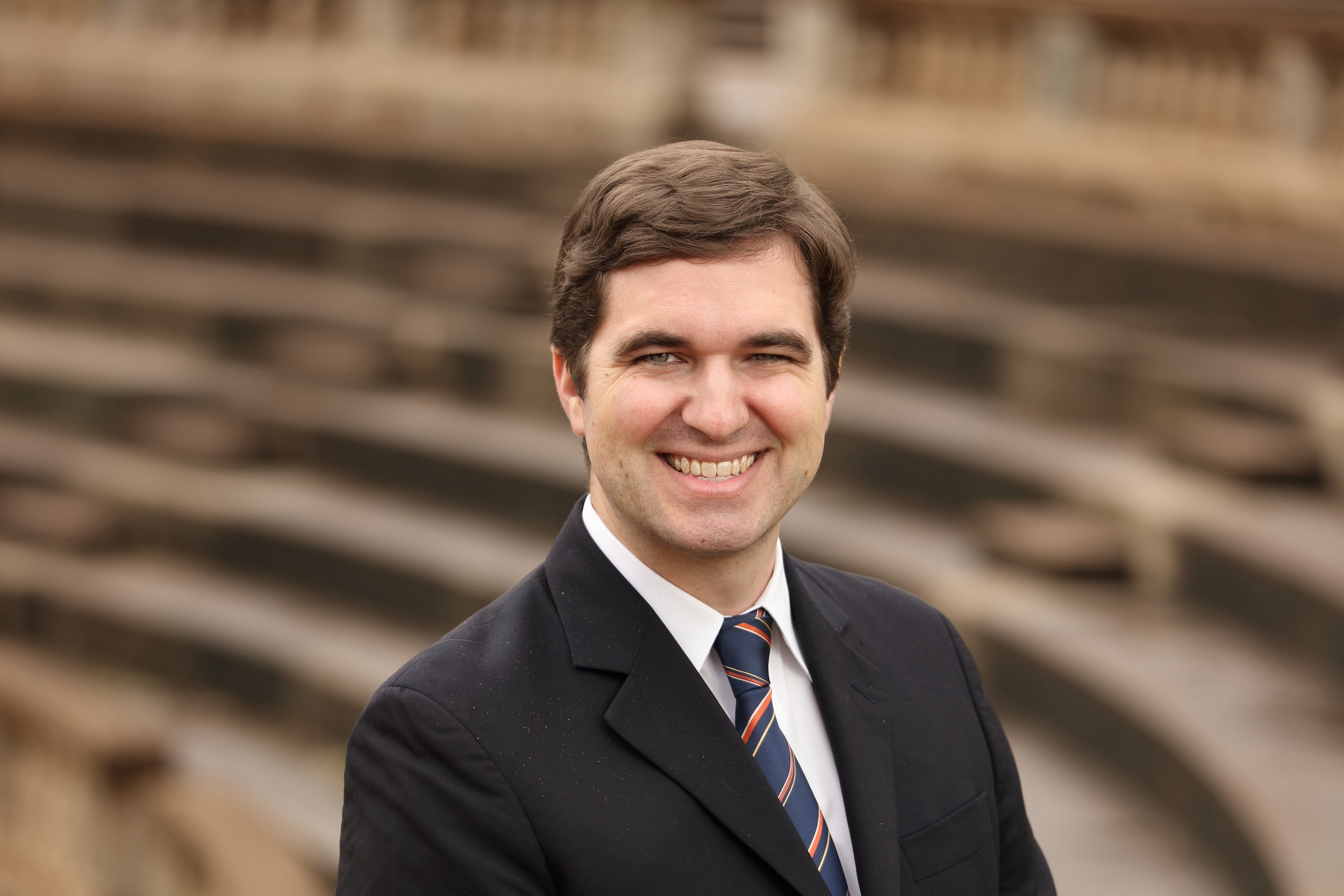
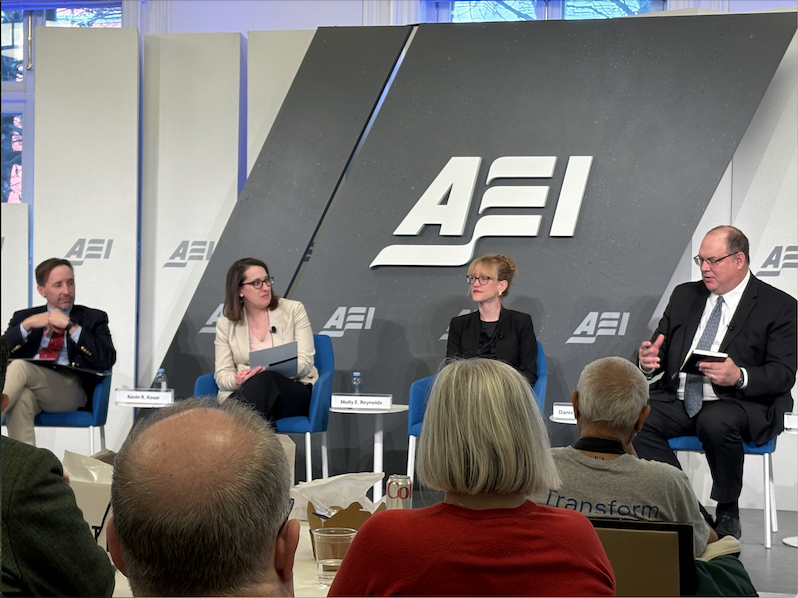
(l-r) Kevin Kosar, Molly Reynolds, Danielle Thomsen, and Daniel Stid.
The Money Signal—How Fundraising Matters in American Politics
Thursday, December 11, 2025
On Thursday, December 4, 2025, the American Enterprise Institute (AEI) held a panel discussion to mark the publication of a book written by Danielle M. Thomsen, Professor of Political Science at the University of California, Irvine and Center for Effective Lawmaking (CEL) faculty affiliate and advisory board member. Titled “The Money Signal—How Fundraising Matters in American Politics,” the book examines how congressional fundraising has changed over the years and why candidates care so much about raising money. The panel also included AEI’s Kevin R. Kosar and the Brookings Institution’s Molly Reynolds (also a CEL faculty affiliate), and was moderated by Daniel Stid (also a CEL advisory board member). They discussed the author’s findings and the implications for American democracy and self-government.
After an introduction from Mr. Stid, Professor Thomsen gave a presentation to summarize her research. She stated that money is a widely used signal of strength and viability in contemporary American politics; it influences the behavior and perceptions of candidates, provides the media a guide for how to cover races, directs future donors where to steer their dollars, and distributes benefits to lawmakers post-election. Candidates raise money in part for the material assets it brings – such as hiring staff and buying advertisements – but a strong fundraising haul brings a host of other benefits, too. In her interviews with congressional candidates, one remarked, “It is more difficult to overcome the perception power of money in politics than it is to overcome the purchasing power of money in politics.” The book provides a wide array of evidence for how the emphasis on dollars shapes American politics. The presentation showcased a few of these findings:
- Candidates for political office are raising more money and earlier in the campaign cycle, especially with the greater importance of primaries and the decline in competitive districts;
- Experienced candidates spend more time on fundraising than other activities (ie, talking with voters, attending public events, meeting with community and party leaders);
- Candidates who struggle to raise money are more likely to drop out, and even more so in the current money-driven era;
- Lawmakers who give more money to party committees receive better committee assignments and are more likely to be transferred to prestigious committees when in office.
These all can have consequences for effective lawmaking as it raises questions about the qualifications used to determine committee assignments – a key tool for passing legislation – as well as how much emphasis and resources are given to fundraising as opposed to other components of serving in public office. In addition, the book draws on the CEL’s data to show that those who give more money to the party team also have more legislative success, particularly in stages of the policymaking process where party leaders have control.
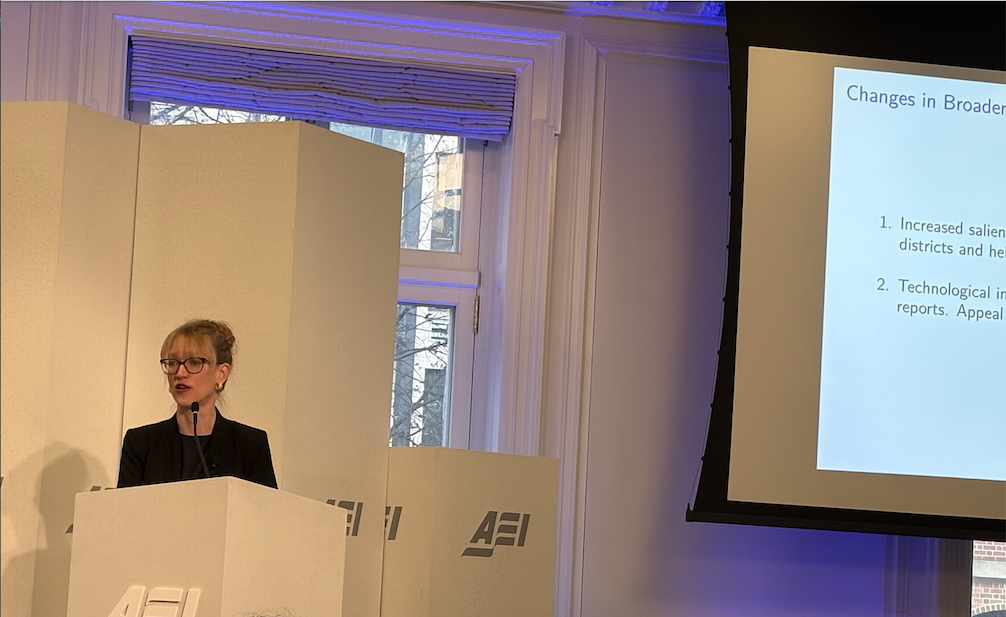
Danielle Thomsen
After Professor Thomsen’s presentation, the panel brought forth other points to consider, such as the connections between fundraising and lobbying, how government data collection can influence the perception of fundraising, whether the increased prominence of fundraising discourages people from running for office, and how this affects candidate quality and the skillset they bring to office. The event concluded with a Q+A session that featured questions about the role of dark money in politics, how fundraising money is spent, and possible reforms that can be enacted to the campaign finance system.
The CEL congratulates Professor Thomsen on her new book, and we are happy to witness a conversation with other CEL affiliates devoted to this important topic.
To watch the full event, go here.
For more information about the book, go here.