
Announcing the Release of the 88th Texas Legislature (2023-2024) State Legislative Effectiveness Scores (SLES)
The Center for Effective Lawmaking (CEL) is proud to announce the release of our State Legislative Effectiveness Scores (SLES) for the 88th Texas Legislature (2023-2024) legislative sessions. This initiative is part of our broader effort to measure the lawmaking effectiveness of individual legislators in all 99 state legislative chambers in the United States.
These scores capture lawmaking effectiveness by tracking the number of bills that legislators sponsor, how far those bills advance through the legislative process, and the substantive significance of the proposals.
With the release of Texas our state-level data initiative continues to grow—building on earlier reports from Montana and Georgia. Additional states will be added in the coming months as we work toward full national coverage.
Highlights from the Texas SLES (2023–2024)
- Top Performers: We identify the top 10 and top 5 most effective lawmakers across both parties and chambers in Texas, including legislators who have consistently ranked as highly effective lawmakers across multiple legislative sessions.
- Above Expectations: We highlight legislators who earned our prestigious Above Expectations designation for lawmaking effectiveness, including both experienced legislators with sustained records and first-term lawmakers who quickly distinguished themselves among their peers.
- Majority Party Advantage: Consistent with CEL research, majority-party legislators were generally more effective lawmakers, reflecting structural advantages such as agenda-setting power and committee leadership.
- Texas Findings: In terms of broader patterns, despite media coverage of partisan bickering, our data show that the Texas State Legislature achieves a much greater balance in lawmaking effectiveness across parties than is found in most states across the country. While the SLES of minority-party lawmakers across the country on the whole averages about 0.6, the average scores in 2023-2024 for minority-party Democrats in the Texas House of Representatives are notably higher at 0.82 and in the Senate at an average value of 0.85. Such egalitarianism translates reasonably well into the number of laws produced by the parties, especially in the Senate. Although 284 laws resulted from the bills sponsored by majority-party Republican Senators in 2023-2024, bills sponsored by Democratic Senators resulted in 170 laws across the term. A bit more of an imbalance occurred in the House, with 147 laws from the bills of Democrats compared to 574 from majority-party Republicans. However, the overall pattern is indicative that both parties were active and effective in the lawmaking process despite unified Republican governance in the state. All that said, a majority-party bias is increasing in Texas, as the average SLES of minority-party lawmakers across all of our data stretching back to 1989 has been 0.93, placing them nearly on par with majority-party lawmakers. This balance has started to fade, especially in the House, in recent years.
You can explore the full report and detailed findings below:
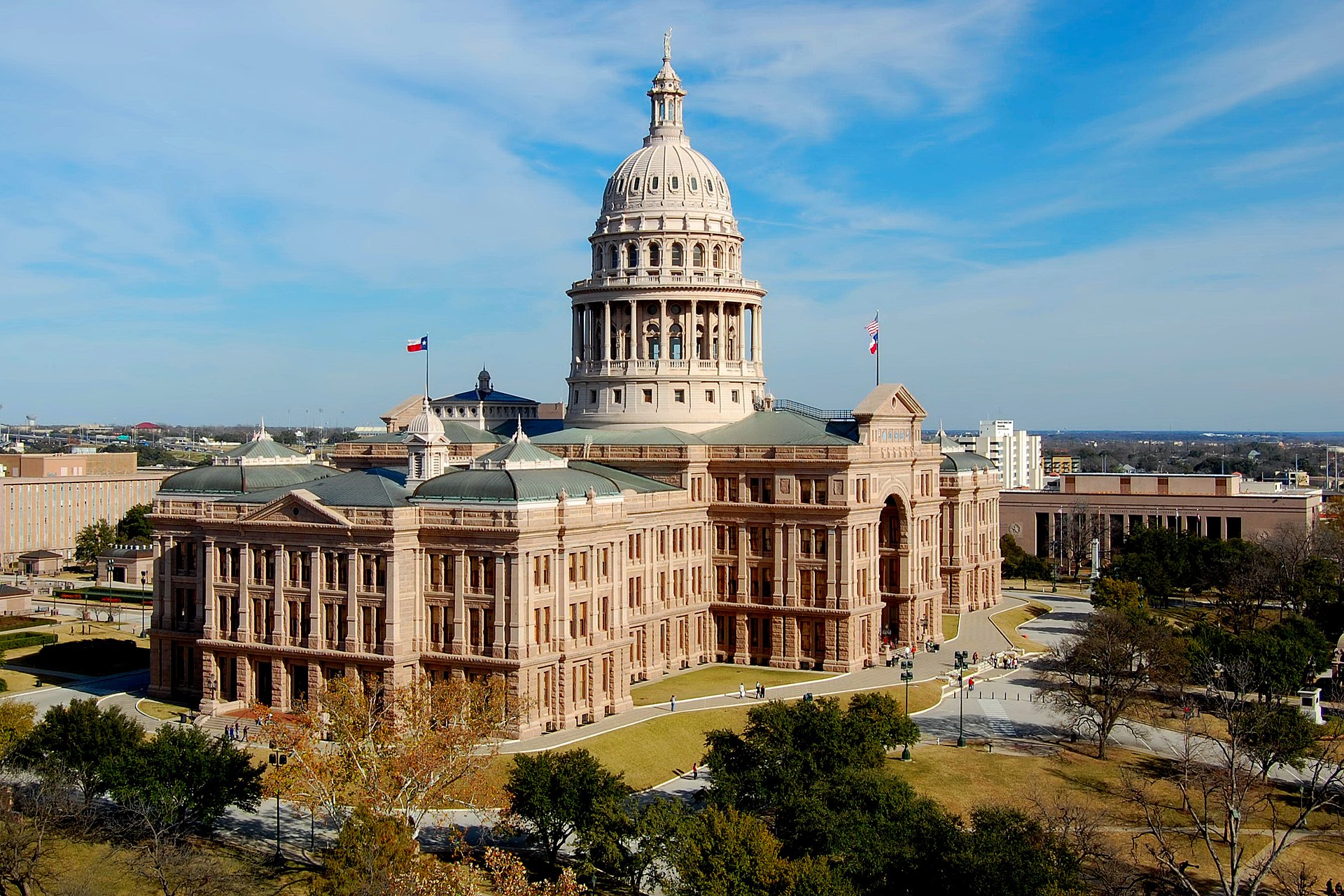
Photo by LoneStarMike, Wikipedia